 LIVE DEMO
Ask Onchain
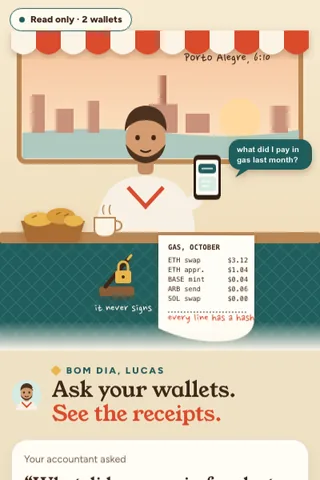
Ask your wallets plain questions, like what you paid in gas last month or when your tokens unlock. Read only, it never signs.
Yours in 1 to 2 days
$100Base · Ethereum +2
 Try it live
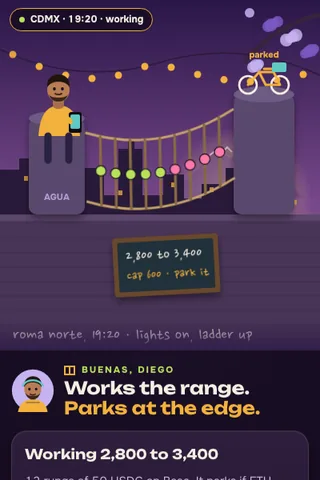
A grid bot that ladders buys and sells inside your range, then parks itself the moment price breaks out instead of bleeding.
Try it live, freeYour USDC is locked in a smart contract, not sent to us. The contract lets us collect it only if we deliver within 14 days of your payment (by 15 Nov 2026 if you pay today). After that date, if we have not collected it, you take it back yourself from My apps, no permission needed. Before it, only we can refund: if we miss the promised date, ask in My apps and we refund you from the contract. View the contract on BaseScan. This covers every payment, a reservation too: the funds are released to us only when we deliver.
Promised delivery: 4 Nov 2026 (counted from payment). Self-refund opens: 15 Nov 2026 (the contract deadline).
Add-ons are not part of this payment. Once your app is delivered you can request them from My apps, and you only pay if you say yes to the quote.
Diego Ramos, a bike courier in Mexico City, watched a grid bot on an exchange keep buying all the way down a 20 percent drop and give back a month of small wins. Ladder Grid runs his ETH and USDC ladder between the prices he picks, from his own wallet on Base, with a capital cap of 600 dollars. When price leaves his range it parks: no new orders, nothing sold in a panic, just a message asking what he wants to do, and every Sunday a report of fees earned against fees paid.
The user app: grid builder (range, rungs, capital cap), scoped permission setup, live ladder with fills, breakout park with a choose what next prompt, weekly grid report with fees earned vs fees paid, kill switch, plans and checkout.
Reshape it entirely: new features, your flows, your brand end to end, integrations you need. We scope it with you.
Grid bots that pause out of range exist on exchanges (Pionex, Gainium). What is less common is a spot DEX grid that runs from the user's own wallet through a scoped, capped permission, parks and waits for a human on breakout rather than auto re-arming, and sends a weekly report that puts grid profit next to gas, DEX fees and slippage paid, so the user can see when the grid is not worth it.
Pionex and Gainium grid bots on centralized exchanges (pause or wait out of range); Hummingbot open source strategies; onchain limit order tools such as 1inch limit orders that can be laddered by hand.
Checked with web searches in October 2026. A search is not proof that nothing similar exists, and the market moves fast, so we recheck before every build.
3 live races fit this app. Each one says why, with its prize and countdown. The rule on existing code is on the race page.
A complete spot DEX grid app you own: people run a capped ladder from their own wallet that parks on breakout, pay you monthly for more grids and rungs, and your console runs pricing, growth, rules and the grid agent.
Every buyer gets the same finished app. Basic branding and copy changes come through a quick form.
Your admin side: revenue, paywall editor, users, rules and the agent log.
Referral and growth mechanics, switched on when you are ready to grow.
A free plan for one small grid, and monthly plans for more grids, rungs, chains and alerts. No fee is taken from users' fills.
Prices are yours to set. Illustrative, not a promise of income.
Unlocked when your app is paid in full
Unlocked when your app is paid in full
Your brand, default pairs and ranges, extra chains or DEXes, or a white label for a trading community are scoped and priced together.
The recipe (how it is built, the data, costs, risks, build order, the pitch and the demo script) is unlocked when your app is paid in full.
Grid trading makes small, frequent gains while price moves sideways, and loses when price trends away. Most grid bots live on exchanges that hold your funds, and many keep buying all the way down a breakout, so a month of small wins disappears in a day. Few tell you whether fees and gas ate the profit.
Grid bots exist and several pause when price leaves the range (Pionex, Gainium, cTrader style bots). Ladder Grid is an incremental take for spot DEXes: it runs from the user's own wallet through a scoped, capped permission, parks on breakout and waits for the user instead of re-arming itself, caps total capital at a number the user sets, and sends a weekly report of grid profit next to DEX fees, gas and slippage paid. Research verdict: partly exists, medium novelty.
Unlocked when your app is paid in full
A grid should work hard inside your range and stop politely at the edge, with an honest bill for what it cost.
Parked, not panicking When price breaks out, the ladder parks and sends one message: what happened, where you stand, and three choices. Nothing more is bought or sold until you choose.
The Sunday bill Grid profit this week, against DEX fees, gas and slippage. If costs ate the profit, it says so in the first line.
Rung lights A ladder you can read at a glance: lit rungs are waiting orders, filled rungs flash once, and the cap line shows how much capital is at work.
Unlocked when your app is paid in full
Cost per use: unlocked when your app is paid in full.
The Sunday bill is the share card: honest grid profit against costs. Parked messages are screenshot worthy because they show a bot that stopped. Trading communities can share a starter range template, never a promise of returns.
Unlocked when your app is paid in full
Unlocked when your app is paid in full
Costs and tools are estimates at the time of writing. General information only, not legal or financial advice.
Nine routes from one vessel. Tap a port to open its chart.
Grid bots are popular and mostly live on exchanges that hold people's funds and keep trading into breakouts. Owning Ladder Grid means you run the careful version: capped ladders from the user's own wallet, a grid that parks at the edge and waits for a human, and a Sunday bill that shows when costs ate the profit. You earn from your own plans, never from a cut of fills.
You do not pick ranges for users. Users set their own range, rungs and cap, and the builder warns when rungs are too tight to beat costs. Your job is the app, support and honest copy.
They can lose money, and the app says so before arming. The park stops further trading at the edge but cannot undo a trend. Keep that line visible, never show projected returns, and let the Sunday bill speak.
Rules differ by country. Ladder Grid never holds funds and acts only within a scoped key the user signs, which helps, but take local advice before charging. Never present it as investment advice.
Show the scope in plain words: two tokens, a cap, your own wallet as the only recipient, an expiry, one tap revoke. Start with small caps and your own grid in public.
Monthly plans for more grids, rungs and chains, a Scaffold tier with sponsored gas and exports, and white label copies for trading communities. Illustrations, not promises.
Illustrative stages, not a forecast. Results depend on you and the market; nothing here is guaranteed.
LIVE DEMOAsk your wallets plain questions, like what you paid in gas last month or when your tokens unlock. Read only, it never signs.
 LIVE DEMO
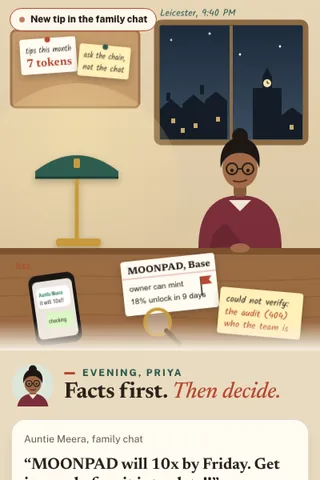
A research agent that writes a cited brief on any token or protocol, and lists what it could not verify.
 LIVE DEMO
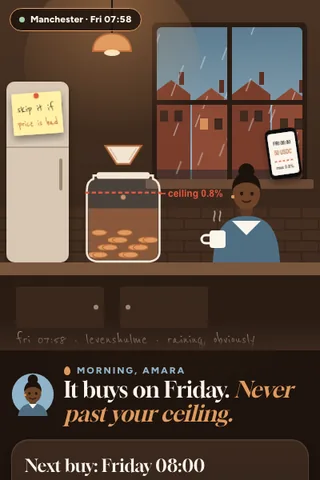
A DCA bot that buys on your schedule, skips any buy where slippage tops your ceiling, and keeps an honest buy diary.
 LIVE DEMO
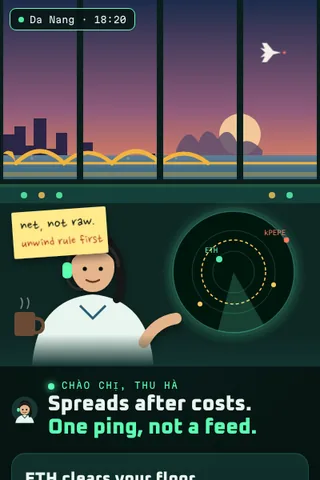
Watches funding rates across perp DEXes, pings you when a spread is worth a look after fees, and opens a hedged pair only inside your caps.
 LIVE DEMO
A giveaway bot that rewards verifiable onchain actions, not likes, checks one person per entry, and draws winners with public randomness.
 LIVE DEMO
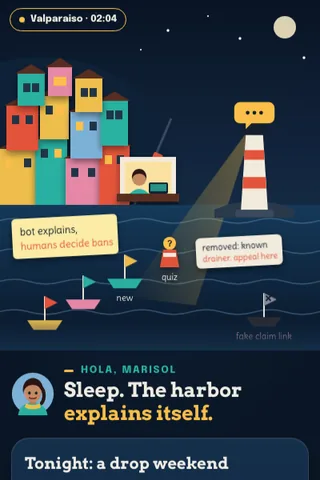
A Telegram and Discord bot for your community: onboarding quiz, token gated roles, calm moderation and onchain alerts, inside each platform's rules.
 LIVE DEMO
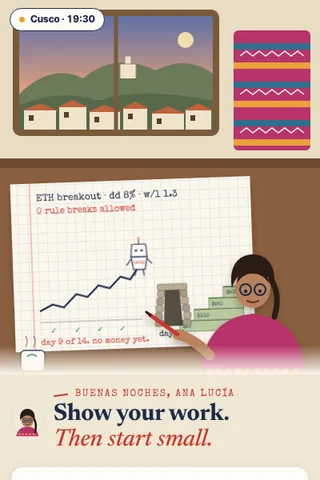
A perp strategy bot that must beat your bar on paper for 14 days before it touches real money, then starts small and demotes itself back to paper on a breach.
 LIVE DEMO
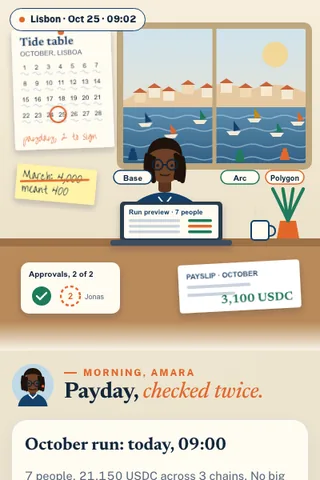
Recurring USDC payroll for remote teams: two people approve each run, everyone gets a payslip, contractors send invoices.