 LIVE DEMO
Ask Onchain
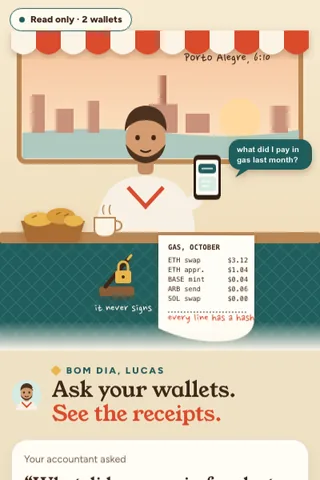
Ask your wallets plain questions, like what you paid in gas last month or when your tokens unlock. Read only, it never signs.
Yours in 1 to 2 days
$100Base · Ethereum +2
 Try it live
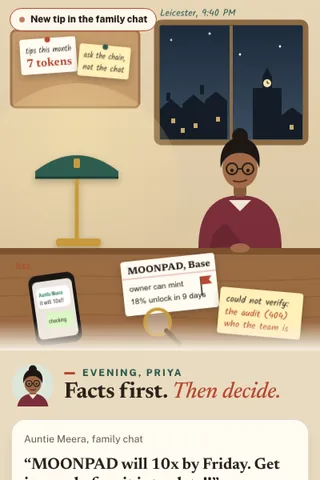
A research agent that writes a cited brief on any token or protocol, and lists what it could not verify.
Try it live, freeYour USDC is locked in a smart contract, not sent to us. The contract lets us collect it only if we deliver within 14 days of your payment (by 15 Nov 2026 if you pay today). After that date, if we have not collected it, you take it back yourself from My apps, no permission needed. Before it, only we can refund: if we miss the promised date, ask in My apps and we refund you from the contract. View the contract on BaseScan. This covers every payment, a reservation too: the funds are released to us only when we deliver.
Promised delivery: 4 Nov 2026 (counted from payment). Self-refund opens: 15 Nov 2026 (the contract deadline).
Add-ons are not part of this payment. Once your app is delivered you can request them from My apps, and you only pay if you say yes to the quote.
Priya Raman, a pharmacist in Leicester, gets a new token pushed at her in the family WhatsApp group every week, always with the words 'it will 10x'. Dig Desk writes her a short brief in two minutes: every claim links to the onchain read or the page it came from, red flags like a live mint key or a big unlock next week are pulled straight from the chain, and a separate list shows what it could not check. It never tells her to buy or sell, so she can reply to the group with facts instead of feelings.
The user app: plain-language dig requests for Base, Solana and Ethereum tokens and protocols, cited briefs with onchain reads and source links, red flags for owner keys, unlocks, holder concentration and liquidity, a could-not-verify list, follow-up questions with a hard no-advice rule, a brief library with receipts, a share card and a three tier paywall with simulated USDC checkout.
Reshape it entirely: new features, your flows, your brand end to end, integrations you need. We scope it with you.
Cited crypto research assistants already exist. What is new here is narrow: each claim is tied to a specific onchain read (contract call, block number, holder snapshot) or a source page, anything below the evidence bar is moved into a visible 'could not verify' list instead of being smoothed over, and the agent refuses buy or sell advice by design.
Messari Copilot and Messari Deep Research write cited answers and long reports from Messari's own curated sources; Surf is a crypto research AI; several ERC-8004 agents and token scanners check owner keys, liquidity locks and holder concentration. None found that pairs onchain-read citations with an explicit could-not-verify section for everyday holders.
Checked with web searches in October 2026. A search is not proof that nothing similar exists, and the market moves fast, so we recheck before every build.
One live race fits this app. Each one says why, with its prize and countdown. The rule on existing code is on the race page.
See every race on the boardA research agent you own: people ask about any token or protocol on Base, Solana or Ethereum and get a cited brief with red flags and an honest could-not-verify list. They pay you for full briefs and watch lists; your console sets the evidence bar, the red flag thresholds and the paywall.
Every buyer gets the same finished app. Basic branding and copy changes come through a quick form.
Your admin side: revenue, paywall editor, users, rules and the agent log.
Referral and growth mechanics, switched on when you are ready to grow.
Readers get three quick briefs a month free. Diggers pay monthly for unlimited full briefs, watch lists and export. Clubs and newsletters pay for Desk seats and a shared library.
Prices are yours to set. Illustrative, not a promise of income.
Unlocked when your app is paid in full
Unlocked when your app is paid in full
Your brand, the default red flag checks and thresholds, reading level, extra chains and integrations such as a Telegram bot or newsletter embeds are scoped and priced together.
The recipe (how it is built, the data, costs, risks, build order, the pitch and the demo script) is unlocked when your app is paid in full.
Ordinary holders get tokens pushed at them in group chats and on X with no way to check the basics. Research tools exist, but answers often read confident even when the evidence is thin, and the reader cannot tell which sentence came from the chain, which came from a blog and which was guessed.
This largely exists. Messari Copilot and Deep Research write cited answers, Surf is a crypto research model, and many scanners flag mint keys, liquidity and holder concentration. Dig Desk is an incremental take: every claim carries either an onchain read (method, block, result) or a source link, claims below the evidence bar move to a visible could-not-verify list, and it refuses buy or sell advice by rule. Research verdict: exists, low novelty.
Unlocked when your app is paid in full
Anyone handed a token tip should be able to see, in two minutes, what is true on the chain, what is only claimed, and what nobody can check yet.
The could-not-verify list A plain list of what the agent tried and failed to confirm, so gaps are visible instead of hidden behind a confident paragraph.
Tap any claim Every sentence opens the exact read it came from: the contract call and block, or the page and the time it was fetched.
Reply with facts A short share card that a worried relative can paste back into the group chat, with links instead of opinions.
Unlocked when your app is paid in full
Cost per use: unlocked when your app is paid in full.
The share card is the hook: someone pastes a calm, cited brief into a group chat and three people ask where it came from. Newsletters and community moderators link the free tier as a house rule before anyone shills.
Unlocked when your app is paid in full
Unlocked when your app is paid in full
Costs and tools are estimates at the time of writing. General information only, not legal or financial advice.
Nine routes from one vessel. Tap a port to open its chart.
Every week someone you know is told a token will 10x, and the only research they do is ask the person selling it. Owning Dig Desk means you run the calm, cited answer: a brief where every claim links to the chain or a page, red flags come from real reads, and the gaps are listed out loud. You can start with your own group chats, then charge the clubs, moderators and newsletters who need facts faster than they can dig.
The agent shows its work: every claim opens the read or page it came from, and anything it could not confirm goes in a separate list. You are not vouching for a token, you are publishing evidence with its sources. When a brief is wrong, the citation shows exactly where, and you fix the rule.
It is built against that. Briefs never mention price or targets, every brief says it is not advice, and buy or sell questions get a plain refusal. Keep that rule on; it is also your best defence.
Briefs list facts and thresholds, like 'the owner can mint new tokens, read at block 24,118,903', and never call anyone a scam. Facts with sources are much safer ground than opinions. Take local advice if you publish briefs commercially at scale.
A full brief costs a few cents in reads and model time. The free tier is capped at three quick briefs a month, so costs only grow with paying users. The Agent screen shows the monthly bill so there are no surprises.
Monthly Digger plans for individuals, Desk seats for clubs and newsletters, and paid custom briefs for teams that want a public, cited write-up of their own token.
Illustrative stages, not a forecast. Results depend on you and the market; nothing here is guaranteed.
LIVE DEMOAsk your wallets plain questions, like what you paid in gas last month or when your tokens unlock. Read only, it never signs.
 LIVE DEMO
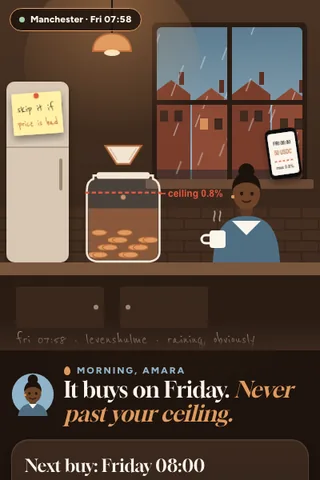
A DCA bot that buys on your schedule, skips any buy where slippage tops your ceiling, and keeps an honest buy diary.
 LIVE DEMO
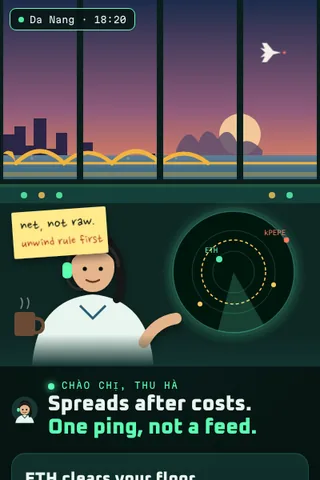
Watches funding rates across perp DEXes, pings you when a spread is worth a look after fees, and opens a hedged pair only inside your caps.
 LIVE DEMO
A giveaway bot that rewards verifiable onchain actions, not likes, checks one person per entry, and draws winners with public randomness.
 LIVE DEMO
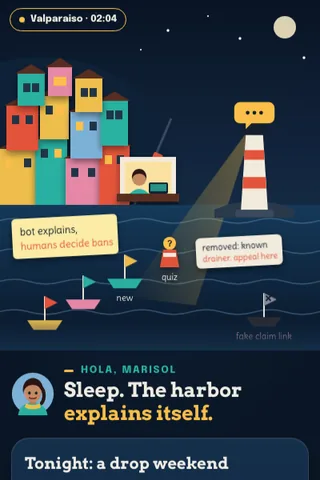
A Telegram and Discord bot for your community: onboarding quiz, token gated roles, calm moderation and onchain alerts, inside each platform's rules.
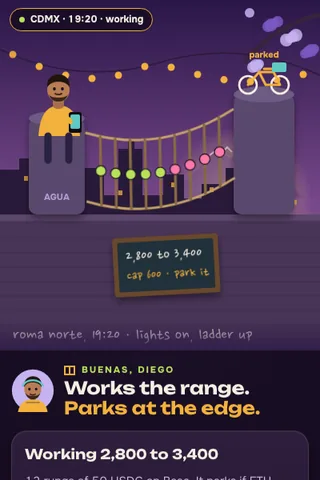 LIVE DEMO
A grid bot that ladders buys and sells inside your range, then parks itself the moment price breaks out instead of bleeding.
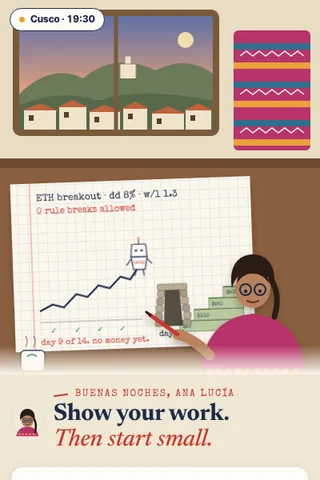 LIVE DEMO
A perp strategy bot that must beat your bar on paper for 14 days before it touches real money, then starts small and demotes itself back to paper on a breach.
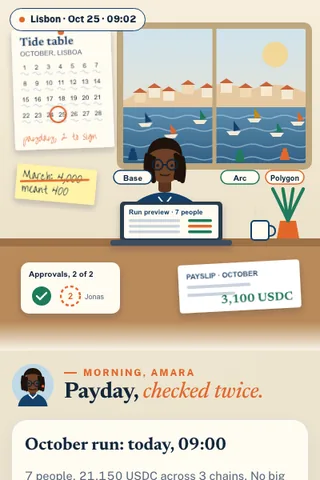 LIVE DEMO
Recurring USDC payroll for remote teams: two people approve each run, everyone gets a payslip, contractors send invoices.