 LIVE DEMO
Ask Onchain
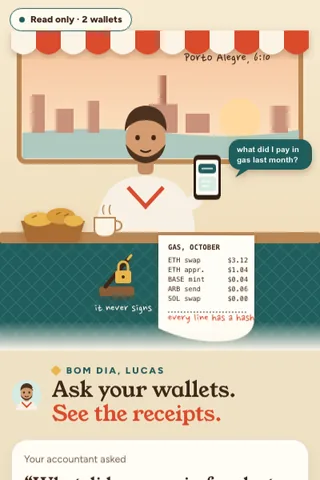
Ask your wallets plain questions, like what you paid in gas last month or when your tokens unlock. Read only, it never signs.
Yours in 1 to 2 days
$100Base · Ethereum +2
 Try it live
Watches funding rates across perp DEXes, pings you when a spread is worth a look after fees, and opens a hedged pair only inside your caps.
Try it live, freeYour USDC is locked in a smart contract, not sent to us. The contract lets us collect it only if we deliver within 14 days of your payment (by 15 Nov 2026 if you pay today). After that date, if we have not collected it, you take it back yourself from My apps, no permission needed. Before it, only we can refund: if we miss the promised date, ask in My apps and we refund you from the contract. View the contract on BaseScan. This covers every payment, a reservation too: the funds are released to us only when we deliver.
Promised delivery: 4 Nov 2026 (counted from payment). Self-refund opens: 15 Nov 2026 (the contract deadline).
Add-ons are not part of this payment. Once your app is delivered you can request them from My apps, and you only pay if you say yes to the quote.
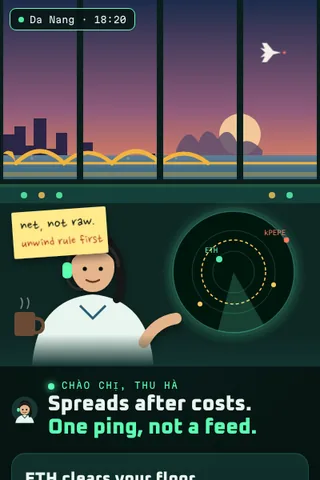
Lê Thu Hà is an air traffic controller in Da Nang who reads radar for a living. Last year she opened a funding trade on a 60 percent spread that fees, slippage and one funding flip turned into a loss. Funding Radar sweeps Hyperliquid, Drift on Solana and GMX on Arbitrum, shows each spread net of fees and slippage, and only pings her when it clears her floor for six hours; if she says yes, it opens a hedged pair inside her caps and unwinds it by her rule.
The user app: illustrated home with first-run onboarding, the radar sweep across Hyperliquid, Drift and GMX with every spread shown net of fees, slippage and borrow, a cost breakdown per pair, alert rules (floor, persistence, size), optional hedged pair execution through scoped permissions with caps and an unwind rule, kill switch, receipts and the in-app paywall.
Reshape it entirely: new features, your flows, your brand end to end, integrations you need. We scope it with you.
Funding scanners, alerts and even dual leg execution already exist. What is less common is ranking spreads net of fees, slippage at the user's size and settlement interval mismatch, keeping alerts as the default, and running the hedged pair only inside user caps with a written unwind rule.
perp-cli (funding arbitrage scans across Hyperliquid, Pacifica, Lighter and Aster with Telegram alerts and dual leg execution), Otomato's funding rate arbitrage scanner (estimates explicitly before fees and slippage), Octav's nine venue funding dashboard, and Chainstack's Hyperliquid funding arbitrage guide.
Checked with web searches in October 2026. A search is not proof that nothing similar exists, and the market moves fast, so we recheck before every build.
2 live races fit this app. Each one says why, with its prize and countdown. The rule on existing code is on the race page.
A funding spread radar you own: users see every spread across Hyperliquid, Drift and GMX net of fees and slippage, get one honest ping when a spread clears their floor, and can open a hedged pair inside their caps. You earn from your own paywall; your console runs pricing, cost assumptions, growth and the sweep agent.
Every buyer gets the same finished app. Basic branding and copy changes come through a quick form.
Your admin side: revenue, paywall editor, users, rules and the agent log.
Referral and growth mechanics, switched on when you are ready to grow.
Users subscribe monthly for GMX as a third venue, Telegram pings, history and hedged pair execution. Net spreads on every market, in-app pings, the unwind rule and the kill switch stay free.
Prices are yours to set. Illustrative, not a promise of income.
Unlocked when your app is paid in full
Unlocked when your app is paid in full
Your brand, venues, fee tiers, cost model and integrations such as a newsletter widget or a team cap are scoped and priced together.
The recipe (how it is built, the data, costs, risks, build order, the pitch and the demo script) is unlocked when your app is paid in full.
Funding spreads between perp venues look like free money on dashboards. People open a pair on a raw spread, then fees, slippage on a thin book, a different settlement interval and one funding flip turn it into a loss. Watching rates by hand is a second job.
This largely exists. perp-cli scans funding across Hyperliquid, Pacifica, Lighter and Aster, sends Telegram alerts and executes both legs. Otomato ranks spreads but says its estimates are before fees and slippage, and Octav compares nine venues. Funding Radar is an incremental take: every spread is shown net of trading fees, slippage at the user's size, GMX borrow costs and settlement mismatch; alerts are the default; and the optional hedged pair runs only inside user caps with an unwind rule written before entry. Research verdict: exists, low novelty.
Unlocked when your app is paid in full
Show people what a funding spread is really worth after costs, and make the hedged trade, if they want it, follow rules they wrote while calm.
Net, not raw Every blip on the radar is the spread after fees, slippage at your size, borrow and settlement mismatch. A 76 percent raw spread can show up as negative.
One honest ping It only pings when a spread clears your floor and stays there for your persistence window, so a one hour spike does not wake you.
The unwind rule Before any pair opens you write when it closes: net below your floor for two funding periods, or either leg's margin too thin.
Unlocked when your app is paid in full
Cost per use: unlocked when your app is paid in full.
A weekly Net Spread Board shows the five spreads that were worth it after costs and the five that only looked good raw. Users share their pair receipts with the cost lines visible.
Unlocked when your app is paid in full
Unlocked when your app is paid in full
Costs and tools are estimates at the time of writing. General information only, not legal or financial advice.
Nine routes from one vessel. Tap a port to open its chart.
Every perp trader has seen a 60 percent funding spread on a dashboard. Few have seen what it was worth after fees, slippage and the flip three hours later. Owning Funding Radar means you run the honest version: spreads net of costs at the user's size, one ping when one clears a floor, and a hedged pair that only runs inside caps the user wrote. Newsletter writers, trading groups and careful carry traders will pay for the number they actually care about.
The app explains each spread as a cost breakdown, and the delivery includes a plain guide to funding on each venue. You run the app and the cost assumptions; users decide what to trade.
They can, and the app says so on every pair screen. Pairs are off by default, open only inside the user's caps, and unwind by the user's rule. Funds stay in the user's accounts behind permissions that cannot withdraw. Never market APR as income.
Some are, and most show raw spreads. Your edge is the net number at the user's size and the discipline around pairs. Lead with the spreads that looked great and were not; that is what free tools rarely show.
Each venue has its own adapter and the cost model is versioned. GMX already works differently and is modelled separately. If a feed goes stale, the radar stops pinging rather than guessing.
Monthly plans for all markets, pings and hedged pairs, plus a Tower tier for heavier users and a paid widget for newsletters that want the net spread board on their site.
Illustrative stages, not a forecast. Results depend on you and the market; nothing here is guaranteed.
LIVE DEMOAsk your wallets plain questions, like what you paid in gas last month or when your tokens unlock. Read only, it never signs.
 LIVE DEMO
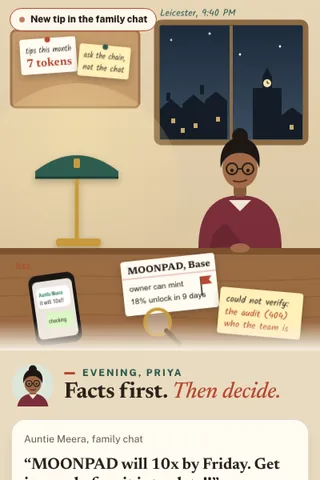
A research agent that writes a cited brief on any token or protocol, and lists what it could not verify.
 LIVE DEMO
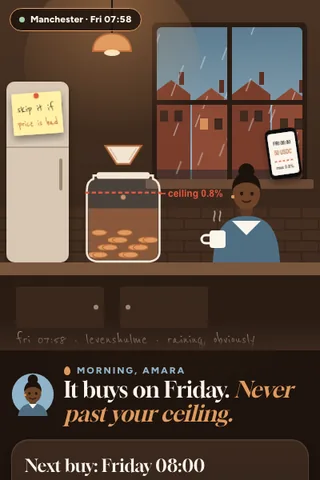
A DCA bot that buys on your schedule, skips any buy where slippage tops your ceiling, and keeps an honest buy diary.
 LIVE DEMO
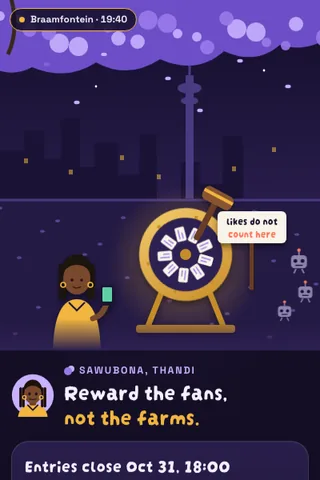
A giveaway bot that rewards verifiable onchain actions, not likes, checks one person per entry, and draws winners with public randomness.
 LIVE DEMO
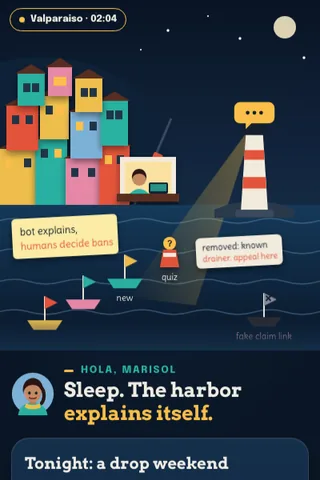
A Telegram and Discord bot for your community: onboarding quiz, token gated roles, calm moderation and onchain alerts, inside each platform's rules.
 LIVE DEMO
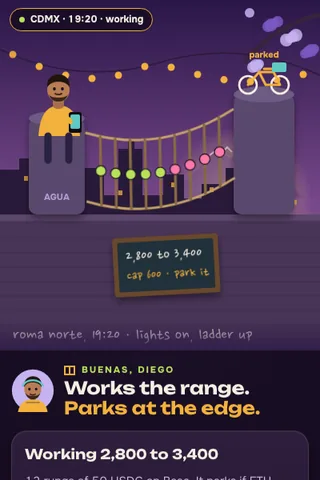
A grid bot that ladders buys and sells inside your range, then parks itself the moment price breaks out instead of bleeding.
 LIVE DEMO
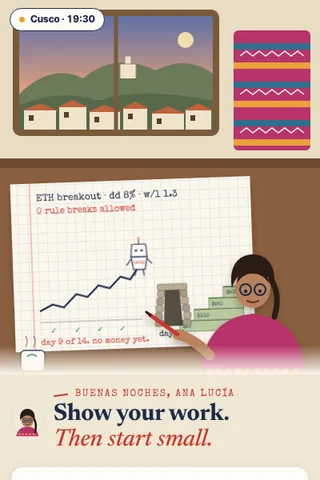
A perp strategy bot that must beat your bar on paper for 14 days before it touches real money, then starts small and demotes itself back to paper on a breach.
 LIVE DEMO
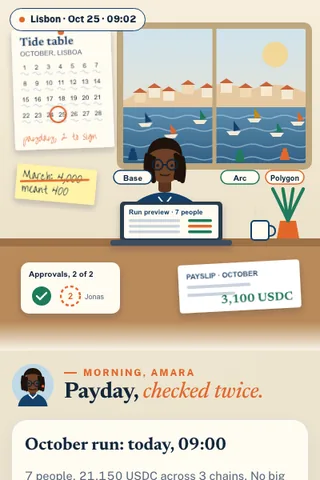
Recurring USDC payroll for remote teams: two people approve each run, everyone gets a payslip, contractors send invoices.