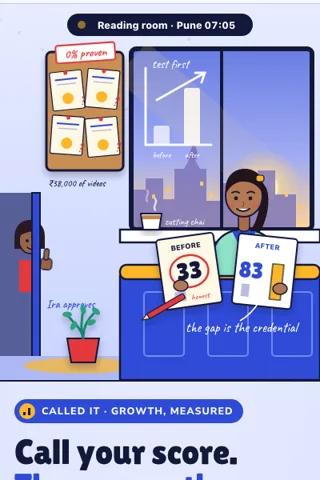
 LIVE DEMO
Called It
Log what you expect to learn before a course, then prove how much you actually grew.
Yours in 1 to 2 days
$100Base · Optimism
 Try it live
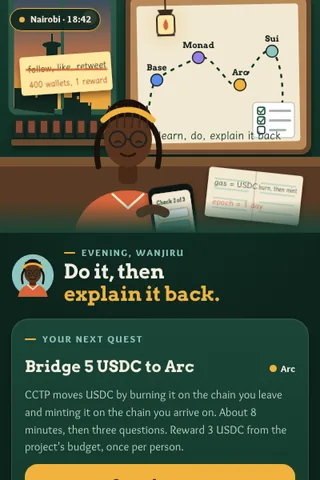
Your own onchain quest platform that rewards understanding, not clicks: a short check after each task, one reward per person.
Try it live, freeYour USDC is locked in a smart contract, not sent to us. The contract lets us collect it only if we deliver within 14 days of your payment (by 15 Nov 2026 if you pay today). After that date, if we have not collected it, you take it back yourself from My apps, no permission needed. Before it, only we can refund: if we miss the promised date, ask in My apps and we refund you from the contract. View the contract on BaseScan. This covers every payment, a reservation too: the funds are released to us only when we deliver.
Promised delivery: 4 Nov 2026 (counted from payment). Self-refund opens: 15 Nov 2026 (the contract deadline).
Add-ons are not part of this payment. Once your app is delivered you can request them from My apps, and you only pay if you say yes to the quote.
Wanjiru Kamau, a 26 year old pharmacy student in Nairobi, finished sixty quests last year by following, liking and swapping dust, then watched a bot farm claim the same rewards from four hundred wallets while she still could not explain what a bridge does. On Know Quest each quest teaches one protocol: she bridges USDC to Arc, then answers three short questions about what just happened, and if she misses one the app re-teaches that idea before she tries again. Her passkey means one reward per person, so the project's budget reaches learners like her instead of farms, and the project pays only for people who passed.
The user app: quest directory across Base, Monad, Arc and Sui, quest player with a short lesson, a verified onchain task, a three question check and a re-teach on any missed answer, passkey based one reward per person, a project quest builder with budget cap and price per passer, a learning transcript with receipts, plans and checkout.
Reshape it entirely: new features, your flows, your brand end to end, integrations you need. We scope it with you.
Quest platforms and learn to earn quizzes are live: Galxe offers quiz credentials, Layer3 runs onchain quests for XP, and Coinbase Learn and Earn already pays verified people who pass a short quiz. What is new here is the combination in a platform you own: every quest pairs a verified onchain task with a three question check about that task, a missed answer triggers a short re-teach instead of a fail, one reward per person through a passkey or an optional personhood check, follow, like and retweet tasks are banned by design, and projects are billed per learner who passed rather than per click or wallet.
Coinbase Learn and Earn (video plus quiz, paid per verified account, closed to outside owners); Galxe quiz credentials and Galxe Passport; Layer3 quests and CUBEs; RabbitHole style onchain quests with receipts. All live; none found as an owned, white label platform that bills projects per passed learner.
Checked with web searches in October 2026. A search is not proof that nothing similar exists, and the market moves fast, so we recheck before every build.
One live race fits this app. Each one says why, with its prize and countdown. The rule on existing code is on the race page.
See every race on the boardA complete quest platform you own where every quest teaches one protocol: learners do the onchain task, pass a three question check and get one reward per person, projects pay you per learner who passed, and your console runs pricing, rules, farm signals and growth.
Every buyer gets the same finished app. Basic branding and copy changes come through a quick form.
Your admin side: revenue, paywall editor, users, rules and the agent log.
Referral and growth mechanics, switched on when you are ready to grow.
Projects pay a fee per learner who passed on top of the reward they fund, plus a Studio plan to post quests. Learners use every quest free; Scholar adds unlimited retakes and a public transcript.
A fee per passed learner set by the owner (default $1.50), charged to the project's budget only when someone passes, and shown on the project's invoice. Learners never pay a fee to claim.
Prices are yours to set. Illustrative, not a promise of income.
Unlocked when your app is paid in full
Unlocked when your app is paid in full
Your brand, starter quest packs per chain, pass mark rules, personhood provider, extra chains and integrations such as Discord roles for passers or a white label domain are scoped and priced together.
The recipe (how it is built, the data, costs, risks, build order, the pitch and the demo script) is unlocked when your app is paid in full.
Quest platforms pay for clicks. Projects buy follows, likes and one swap of dust, farms run the same quest from hundreds of wallets, and real newcomers finish sixty quests without being able to explain what they did. Projects end up paying for users who leave the day the reward lands.
Most of this exists. Galxe has quiz credentials and a passport, Layer3 runs onchain quests for XP, and Coinbase Learn and Earn already pays verified people who pass a short quiz. Know Quest is an owned take on the same idea: each quest pairs a verified onchain task with a three question check about that task, a missed answer triggers a short re-teach, one reward per person comes from a passkey or an optional personhood check, social engagement tasks are banned, and projects pay per learner who passed. Research verdict: exists in parts, low novelty, real value in the combination and in owning it.
Unlocked when your app is paid in full
Every quest should leave a person knowing something they did not know before, and the reward should go to that person once.
Three questions, then the reward Right after the task, while it is fresh: what did the bridge burn, where did it mint, how long did it take. Learners remember the check more than the reward.
The re-teach card Miss a question and a 40 second card explains that one idea with the learner's own transaction as the example, then asks again in different words.
A transcript worth sharing Each pass adds a line to a public learning transcript: protocol, chain, date, first try or after a re-teach. People share it instead of a screenshot of points.
Unlocked when your app is paid in full
Cost per use: unlocked when your app is paid in full.
Projects come for the number they can trust: cost per learner who passed. Learners share transcripts that link back to the quest, and each project brings its own community to its quest page. The owner publishes a monthly pass rate report per protocol.
Unlocked when your app is paid in full
Unlocked when your app is paid in full
Costs and tools are estimates at the time of writing. General information only, not legal or financial advice.
Nine routes from one vessel. Tap a port to open its chart.
Every protocol spends a growth budget on quests and gets farms, follows and users who leave the day the reward lands. Owning Know Quest means you sell the one number those teams actually want: cost per person who understood the product, counted once per person. Start with one protocol you already use, publish its pass rate, and every other team in that ecosystem has a reason to call you.
You do not write the task checks. The app ships with readers for Base, Monad, Arc and Sui, and a quest is a form: pick the protocol, describe the task, add questions with sources, set a budget. Your real job is reviewing questions and talking to projects.
Some will not, and that is fine. Teams burned by farms are the ones to start with. Run your first quest free for one protocol and show them cost per passed learner next to what their last click campaign cost. One honest comparison sells the next three.
Some will. Passkeys stop casual multi wallet farming, question variants and rotation blunt leaked answers, and projects can require a stronger personhood check. Tell projects plainly it is a strong default, not a promise, and show them the flags you caught.
Rewards are small payments from a project's stated budget for completing a lesson, not a token sale or a promise of future tokens. Points are not tokens, and the app says airdrops are never guaranteed. Take local advice before running rewards in a new country, and never market quests as a way to get rich.
Projects pay a fee per learner who passed on top of the reward they fund, plus a Studio plan to post quests. Scholar plans from learners add a smaller recurring line.
Illustrative stages, not a forecast. Results depend on you and the market; nothing here is guaranteed.
LIVE DEMOLog what you expect to learn before a course, then prove how much you actually grew.
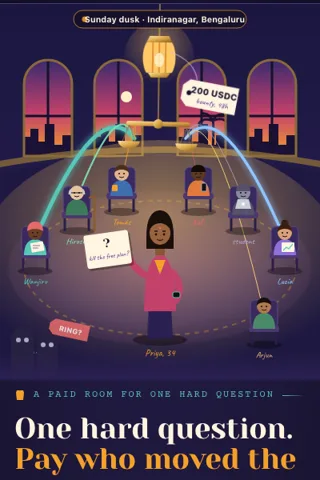 LIVE DEMO
Pose a hard question, stake a bounty, and pay the crowd by how much each answer moved the final consensus.
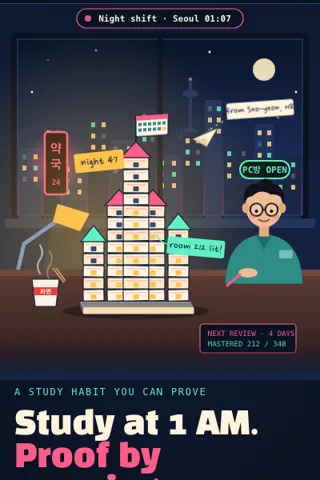 LIVE DEMO
Turn what you are learning into spaced repetition decks that prove your streak and mastery onchain.
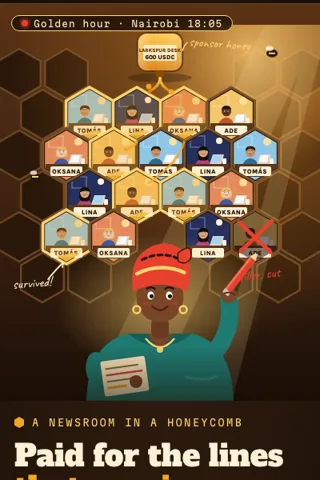 LIVE DEMO
A group writes one living briefing together and everyone is paid by the lines that survive edits.
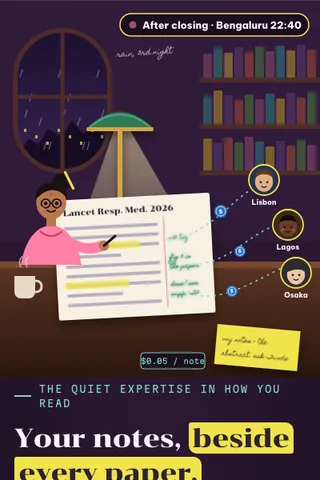 LIVE DEMO
Your highlights and annotations on any article become a collectible, tippable layer others can subscribe to.
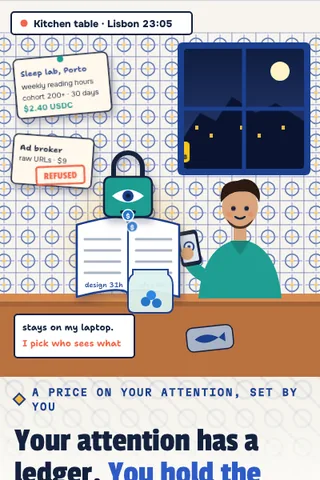 LIVE DEMO
Keep a private log of what you read and watch, then sell anonymized slices only when you choose.
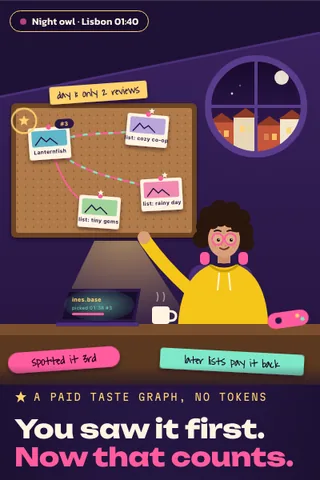 LIVE DEMO
Curate a list early, and earn a share when the things you picked go on to be loved.
 LIVE DEMO
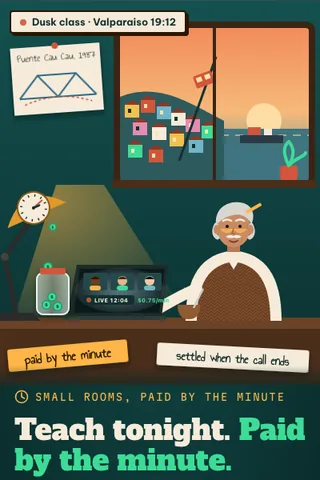
Teach live in small rooms where students pay per minute and you get paid the second the call ends.