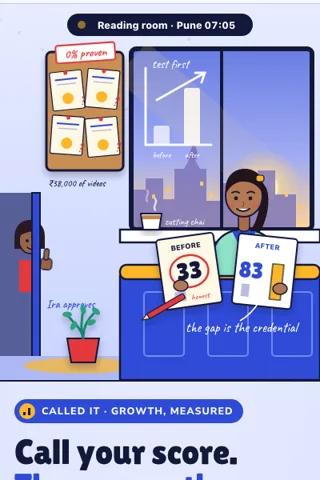
 LIVE DEMO
Called It
Log what you expect to learn before a course, then prove how much you actually grew.
Reserve · refundable deposit
$149Base · Optimism
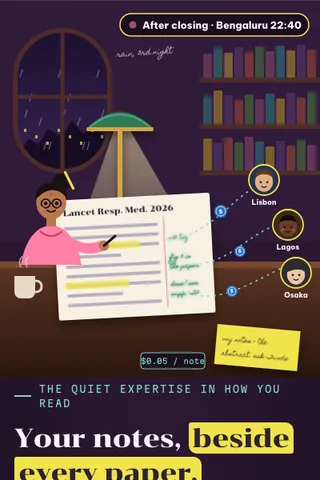 Try it live
Your highlights and annotations on any article become a collectible, tippable layer others can subscribe to.
Try it live, freeYour USDC is locked in a smart contract, not sent to us. We can only collect it by delivering before 27 Oct 2026. If we miss it, you take it back yourself from My apps, no permission needed. We can also refund you any time. View the contract on BaseScan.
Promised delivery: 27 Oct 2026 (counted from payment).
Add-ons are not part of this payment. Once your app is delivered you can request them from My apps, and you only pay if you say yes to the quote.
Priya reads 40 papers a month and her margin notes are better than the abstracts. Margin Notes lets her publish annotations as an onchain layer over any URL, and readers pay a few cents in USDC to see her notes appear beside the text.
Browser overlay web app, annotation registry contract, USDC micro-unlocks, annotator profile page
Reshape it entirely: new features, your flows, your brand end to end, integrations you need. We scope it with you.
Onchain annotation exists as a prototype; paid subscriptions to an annotator's layer were not found.
Hypothesis and Glasp handle web annotation without payouts, and Public Annotation Network (HackFS) stored annotations on Ethereum and IPFS without tipping or subscriptions.
Checked with web searches in October 2026. A search is not proof that nothing similar exists, and the market moves fast, so we recheck before every build.
Fits once shipped on Base; retroactive grants need a live app
Fits if the annotation registry is open source
The complete Margin Notes app: careful readers publish their highlights and margin notes as a layer beside any paper, prove they were first, and get paid in USDC per unlock, with a paywall, owner console and anchor agent built in.
Every buyer gets the same finished app. Basic branding and copy changes come through a quick form.
Your admin side: revenue, paywall editor, users, rules and the agent log.
Referral and growth mechanics, switched on when you are ready to grow.
Publishing is free. The owner keeps a small fee on every reader unlock, and annotators who want subscriptions, the digest and the question inbox pay a monthly Pro plan.
The unlock fee is set by the owner (5% by default). Gas on Base is typically well under $0.01 per unlock.
Prices are yours to set. Illustrative, not a promise of income.
Unlocked when your app is paid in full
Unlocked when your app is paid in full
Custom work from $1,200: integrations with a reference manager or LMS, institution SSO, a different chain, or a field specific layer format. Scoped on a call.
The recipe (how it is built, the data, costs, risks, build order, the pitch and the demo script) is unlocked when your app is paid in full.
Careful readers (researchers, clinicians, analysts, students) leave their best thinking in margins that nobody else ever sees. Their colleagues would pay a little to read a paper with those notes beside it, but today the notes live on paper or in private apps, with no way to publish, prove authorship or get paid.
Web annotation is well served: Hypothesis and Glasp let people highlight and annotate any page, without payouts. Public Annotation Network, an ETHGlobal HackFS project, stored annotations on Ethereum and IPFS but had no tipping or subscriptions. What we did not find is a paid layer: readers unlocking or subscribing to one annotator's notes over any URL, with a registry entry that shows who annotated first. The paid layer is the uncommon part; annotation itself is not new.
Unlocked when your app is paid in full
Let the quiet expertise in how people read become something others can find, trust and pay for, with the reader's name kept on it.
Your notes, finally seen The first time a stranger in another country unlocks your notes on a paper, the work you were doing anyway becomes visible.
Cents, not paywalls Readers pay a few cents for one paper's notes. Low enough to try, and a subscription follows once they trust how you read.
Sunday digest and questions Subscribers get a weekly digest of new notes and can ask one question, which the annotator answers as a new note. It keeps both sides coming back.
Unlocked when your app is paid in full
Cost per use: unlocked when your app is paid in full.
Every unlocked layer shows the annotator's name and a subscribe button next to the paper. Annotators share their profile with journal clubs and classes; each new reader sees other annotators on the same paper.
Unlocked when your app is paid in full
Unlocked when your app is paid in full
Costs and tools are estimates at the time of writing. General information only, not legal or financial advice.
Nine routes from one vessel. Tap a port to open its chart.
Margin Notes lets sharp readers publish their highlights and annotations as a layer over any article, and readers pay a few cents in USDC to see them. Owning it means the annotators, the subscribers and the payment rails are on your deployment and your wallet. You are building the home for a kind of expertise that no big platform pays for today.
You run Margin Notes from an admin screen: invite annotators, set default prices, moderate notes. DEPLOYR handles the deploy from your wallet.
Most won't at first. People pay for notes from someone they already trust in a niche, like a clinician on medical papers or an analyst on filings. Start with one niche and one or two respected annotators.
Notes sit beside the text, they do not copy it. Set a clear rule: quote only short phrases, never full paragraphs, and remove notes if a publisher asks. If in doubt, get local advice.
Yes. The contracts are deployed from your wallet and fees route to it. You can see every payment on a block explorer.
Bugs happen. Keep a status post pinned, tell users honestly, and contact DEPLOYR support. Payments already made stay onchain.
Readers pay per note layer or subscribe to annotators; the owner keeps a platform fee on each payment and charges teams for private shared layers. About $1M a year is a target to work toward, not a promise.
Illustrative stages, not a forecast. Results depend on you and the market; nothing here is guaranteed.
LIVE DEMOLog what you expect to learn before a course, then prove how much you actually grew.
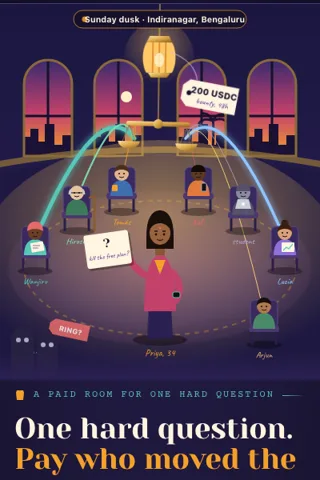 LIVE DEMO
Pose a hard question, stake a bounty, and pay the crowd by how much each answer moved the final consensus.
 LIVE DEMO
Turn what you are learning into spaced repetition decks that prove your streak and mastery onchain.
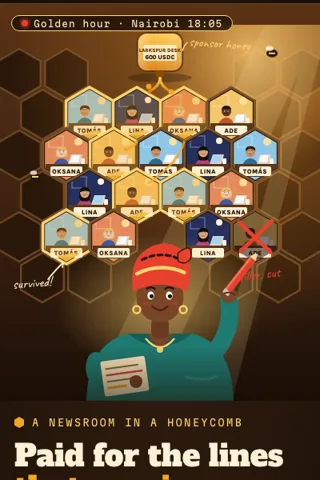 LIVE DEMO
A group writes one living briefing together and everyone is paid by the lines that survive edits.
 LIVE DEMO
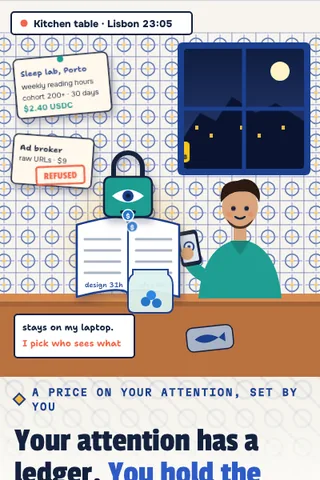
Keep a private log of what you read and watch, then sell anonymized slices only when you choose.
 LIVE DEMO
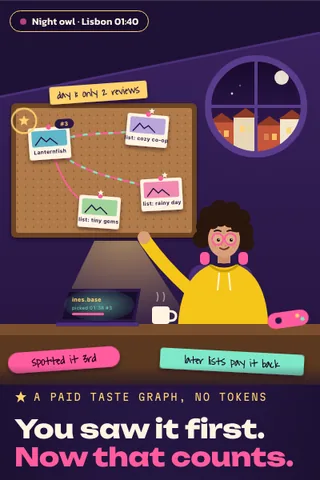
Curate a list early, and earn a share when the things you picked go on to be loved.
 LIVE DEMO
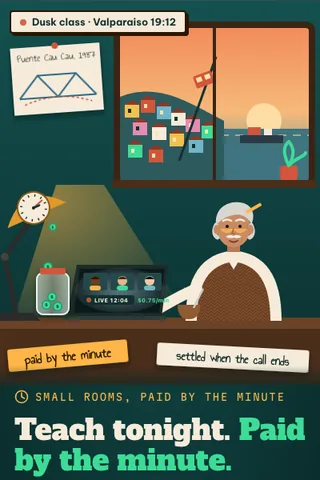
Teach live in small rooms where students pay per minute and you get paid the second the call ends.
 LIVE DEMO
Write letters to the future that unlock for named people at a date or when you stop checking in.