 LIVE DEMO
Called It
Log what you expect to learn before a course, then prove how much you actually grew.
Yours in 1 to 2 days
$100Base · Optimism
 Try it live
Your own NFT marketplace, commission first: buyers fund a brief in escrow, artists deliver, and the brief becomes the piece's provenance.
Try it live, freeYour USDC is locked in a smart contract, not sent to us. The contract lets us collect it only if we deliver within 14 days of your payment (by 15 Nov 2026 if you pay today). After that date, if we have not collected it, you take it back yourself from My apps, no permission needed. Before it, only we can refund: if we miss the promised date, ask in My apps and we refund you from the contract. View the contract on BaseScan. This covers every payment, a reservation too: the funds are released to us only when we deliver.
Promised delivery: 6 Nov 2026 (counted from payment). Self-refund opens: 15 Nov 2026 (the contract deadline).
Add-ons are not part of this payment. Once your app is delivered you can request them from My apps, and you only pay if you say yes to the quote.
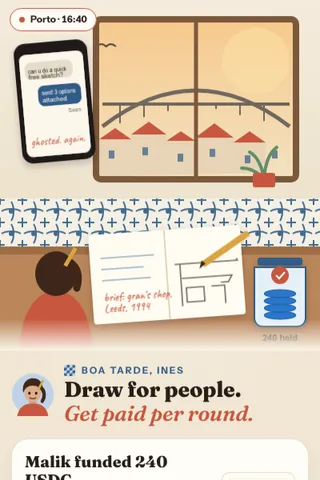
Ines Duarte draws shopfronts in Porto, and her commissions arrive as DMs that ghost after the first sketch. On Commission Market a buyer funds the brief in escrow before she lifts a pencil, each sketch and revision round releases a slice, and the finished piece mints to the buyer with the brief and every round attached. When it resells, the royalty splits between Ines and the colorist who helped her.
The buyer and artist app: artist profiles with open slots, a brief builder with USDC escrow, sketch and revision rounds with milestone release, delivery that mints to the buyer with the brief and rounds as provenance, collaborator royalty splits, a provenance viewer and receipts.
Reshape it entirely: new features, your flows, your brand end to end, integrations you need. We scope it with you.
Commission escrow and NFT minting both exist, but mostly as separate tools or hackathon prototypes (Art Block, ArtPay, an EIP commission draft). What is new here is the packaged marketplace where the funded brief, the sketch and revision rounds and the approvals become the token's provenance, with milestone release and a resale royalty split across named collaborators.
Art Block and ArtPay (hackathon commission mints), the NFT Commission Standard discussion on Ethereum Magicians, fiat commission sites like Artists&Clients with milestone payments, and Metaplex or 0xSplits for royalty splits.
Checked with web searches in October 2026. A search is not proof that nothing similar exists, and the market moves fast, so we recheck before every build.
3 live races fit this app. Each one says why, with its prize and countdown. The rule on existing code is on the race page.
A commission first NFT marketplace you own: buyers fund briefs in escrow, artists deliver in rounds, every finished piece mints with its own provenance, and you earn a fee on completed briefs plus artist plans.
Every buyer gets the same finished app. Basic branding and copy changes come through a quick form.
Your admin side: revenue, paywall editor, users, rules and the agent log.
Referral and growth mechanics, switched on when you are ready to grow.
A fee on every completed brief, taken from the escrow at final release, plus monthly plans for artists who want more slots, revision rounds and collaborator splits. Buyers never pay a subscription.
Completion fee of 3 to 8 percent of the brief budget (default 5 percent, 3 percent on Studio), shown to both sides before funding.
Prices are yours to set. Illustrative, not a promise of income.
Unlocked when your app is paid in full
Unlocked when your app is paid in full
Your brand, fee defaults, chain choice, license templates, print fulfilment or a white label studio domain are scoped and priced together.
The recipe (how it is built, the data, costs, risks, build order, the pitch and the demo script) is unlocked when your app is paid in full.
Independent artists take commissions over DMs and payment apps. Buyers ghost after free sketches, artists ghost after deposits, and when a piece is resold online nobody can see who made it, what was asked for or who helped. NFT marketplaces reward speculation on finished drops, not the slow work of making something for someone.
The parts exist. Fiat commission sites run milestone payments, NFT escrow programs exist on Metaplex, royalty splits exist through 0xSplits and Metaplex creators, and hackathon projects such as Art Block and ArtPay minted commissions. What we did not find live is a commission first marketplace where the funded brief, every sketch and revision round and each approval become the token's provenance, with milestone release and resale royalties split to named collaborators. Research verdict: rare as a product, medium novelty.
Unlocked when your app is paid in full
Make commissioning art feel safe for both sides, and make the story of how a piece was made part of the piece forever.
Funded, not promised An artist sees the budget sitting in escrow before they start. That one fact ends most of the ghosting.
The provenance page Every piece has a page: the brief in the buyer's words, each sketch, the notes and approvals. People share these more than the finished art.
Credit that pays The colorist, letterer or assistant is a named collaborator with a royalty share on every resale.
Unlocked when your app is paid in full
Cost per use: unlocked when your app is paid in full.
Every delivered piece has a public provenance page that credits the artist and links to their open slots, so each sale advertises the next commission. Artists bring their existing clients because the escrow protects them.
Unlocked when your app is paid in full
Unlocked when your app is paid in full
Costs and tools are estimates at the time of writing. General information only, not legal or financial advice.
Nine routes from one vessel. Tap a port to open its chart.
Every illustrator you know takes commissions over DMs and hopes the buyer pays. Owning Commission Market means you run the place where that stops: the budget sits in escrow before anyone draws, rounds release money as they are approved, and each finished piece mints with the story of how it was made. Start with one artist community, earn a fee on every completed brief, and let each provenance page sell the next commission.
Artists trust escrow, not you. The budget is visible in a contract before they start, and the rules are on every brief. Many owners start by running it for one artist friend and their clients, then grow from that group.
Each round releases only its own slice, so a fight is over a small amount, not the whole budget. The dispute review shows both sides the written brief and every file. You can name trusted artists as reviewers instead of deciding yourself.
Not everywhere. Some marketplaces skip creator royalties, and the app says so plainly. The main income is the commission itself; royalties are a bonus that pays where honoured.
Commissions are services, so artists may owe tax on income like any freelance work, and the brief states which license the buyer gets. Take local advice before you scale. We never promise resale value or profit.
A completion fee on each brief plus monthly artist plans, and later a white label tier for studios that want their own storefront.
Illustrative stages, not a forecast. Results depend on you and the market; nothing here is guaranteed.
LIVE DEMOLog what you expect to learn before a course, then prove how much you actually grew.
 LIVE DEMO
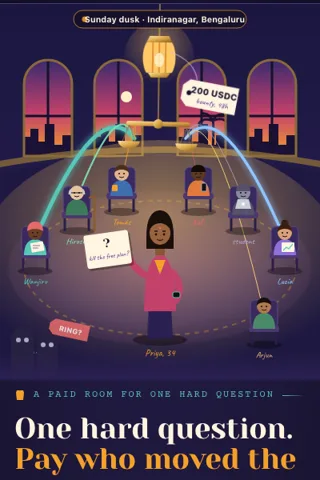
Pose a hard question, stake a bounty, and pay the crowd by how much each answer moved the final consensus.
 LIVE DEMO
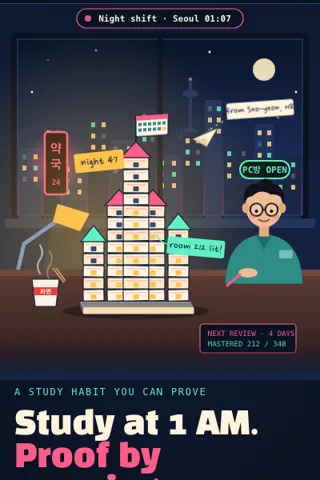
Turn what you are learning into spaced repetition decks that prove your streak and mastery onchain.
 LIVE DEMO
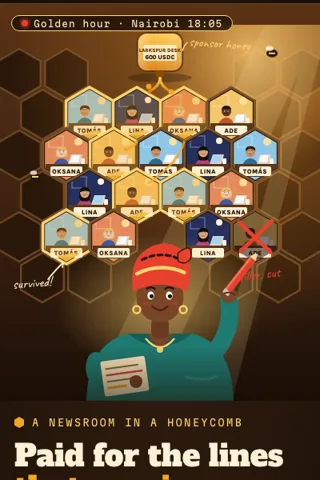
A group writes one living briefing together and everyone is paid by the lines that survive edits.
 LIVE DEMO
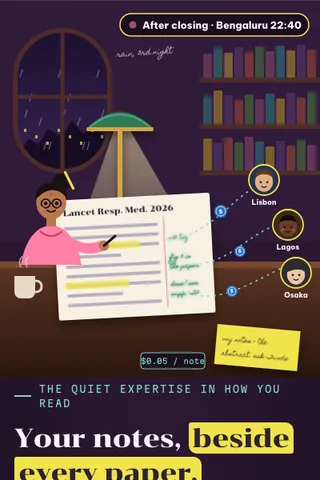
Your highlights and annotations on any article become a collectible, tippable layer others can subscribe to.
 LIVE DEMO
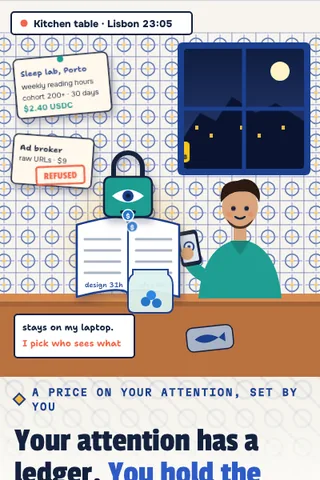
Keep a private log of what you read and watch, then sell anonymized slices only when you choose.
 LIVE DEMO
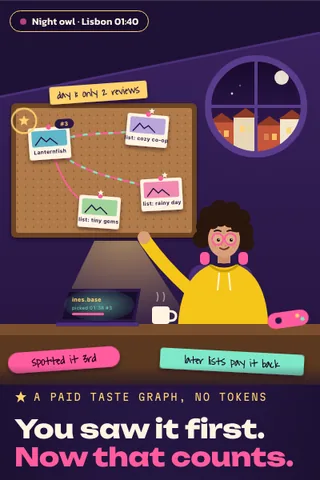
Curate a list early, and earn a share when the things you picked go on to be loved.
 LIVE DEMO
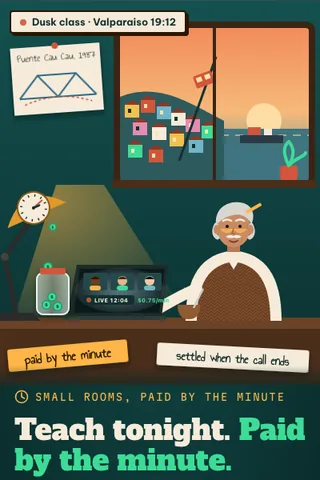
Teach live in small rooms where students pay per minute and you get paid the second the call ends.