
 LIVE DEMO
Fix Proof
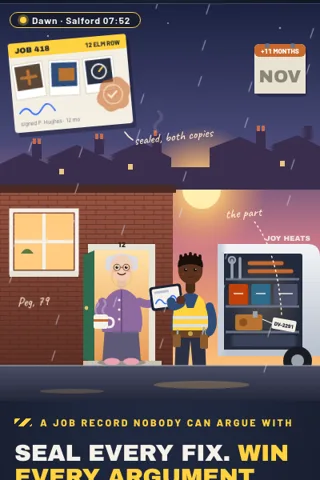
Tradespeople log each repair with photos and a customer signature, sealed onchain as a warranty.
Yours in 1 to 2 days
$100Base · Polygon +1
 Try it live
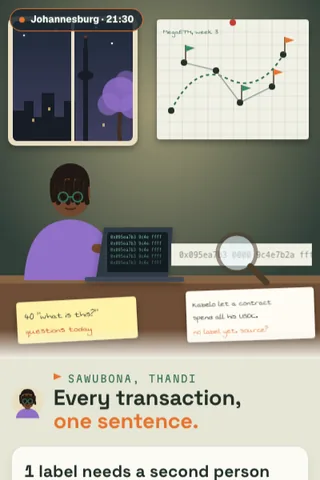
Your own block explorer that explains every transaction in one sentence and lets your community add sourced labels to addresses.
Try it live, freeYour USDC is locked in a smart contract, not sent to us. The contract lets us collect it only if we deliver within 14 days of your payment (by 15 Nov 2026 if you pay today). After that date, if we have not collected it, you take it back yourself from My apps, no permission needed. Before it, only we can refund: if we miss the promised date, ask in My apps and we refund you from the contract. View the contract on BaseScan. This covers every payment, a reservation too: the funds are released to us only when we deliver.
Promised delivery: 6 Nov 2026 (counted from payment). Self-refund opens: 15 Nov 2026 (the contract deadline).
Add-ons are not part of this payment. Once your app is delivered you can request them from My apps, and you only pay if you say yes to the quote.
Thandi Mokoena moderates a builders community in Johannesburg on a chain so new that its explorer shows little more than raw hex, and members ask her what a contract is forty times a day. Story Scan turns each transaction into one plain sentence and lets her members label addresses, but a label only shows as confirmed once it has a source link and a second member confirms it.
The user app: transaction search with one sentence explanations on Base, Monad and MegaETH, address pages, community labels with required source links and a second confirmer, disputes, a chain dashboard of new contracts and top apps, history with receipts, plans and checkout.
Reshape it entirely: new features, your flows, your brand end to end, integrations you need. We scope it with you.
Transaction explanations exist (Etherscan summaries, Blockscout interpretation, Noves and Tenderly decoders) and label sets exist (Etherscan labels, Arkham, the Open Labels Initiative). What is new is a community owned explorer for a new chain where labels require a source link and a second confirmer before they show as confirmed, accusatory labels need more, and the owner gets a dashboard of new contracts and top apps for their own community.
Blockscout with transaction interpretation and MetaSuites labels; Etherscan labels and summaries; SocialScan community contributed labels; the Open Labels Initiative data model. None found that combine one sentence decoding with sourced, two person confirmed community labels for a new chain's own community.
Checked with web searches in October 2026. A search is not proof that nothing similar exists, and the market moves fast, so we recheck before every build.
One live race fits this app. Each one says why, with its prize and countdown. The rule on existing code is on the race page.
See every race on the boardA block explorer you own for your community's new chain: every transaction in one sentence, address labels that need a source and a second confirmer, and a front page of new contracts and top apps; your console runs pricing, label rules, growth and the indexer agent.
Every buyer gets the same finished app. Basic branding and copy changes come through a quick form.
Your admin side: revenue, paywall editor, users, rules and the agent log.
Referral and growth mechanics, switched on when you are ready to grow.
Reading and labeling are free for the community. Scout is a monthly plan for people who watch addresses, and Guild is a monthly plan for projects that want a verified badge on their own contracts and an explainer widget.
Prices are yours to set. Illustrative, not a promise of income.
Unlocked when your app is paid in full
Unlocked when your app is paid in full
Your brand, the chains indexed at launch, label categories, source rules and integrations such as a Discord bot or wallet API are scoped and priced together.
The recipe (how it is built, the data, costs, risks, build order, the pitch and the demo script) is unlocked when your app is paid in full.
On a new chain, the explorer is thin: raw hex, unverified contracts and no names. Community members cannot tell what a transaction did or who an address belongs to, so moderators answer the same questions all day and people sign things they do not understand. Rumors fill the gap, including false accusations against addresses.
Decoders and labels exist: Etherscan and Blockscout explain some transactions, Noves and Tenderly decode calls, Etherscan, Arkham and the Open Labels Initiative maintain labels. Story Scan is a community owned explorer focused on a new chain: one sentence explanations for every transaction, and labels that only show as confirmed with a source link and a second member's confirmation, with stricter rules for accusatory labels. Research verdict: partly exists, medium novelty.
Unlocked when your app is paid in full
Make a new chain readable on day one, with names the community can prove.
One sentence per transaction Who did what with how much, in plain words, with the raw details one tap away.
Labels with receipts Every label carries a source link, a proposer and a confirmer. Nothing shows as confirmed on one person's word.
Your chain's front page New contracts today, top apps by activity and how much of the chain your community has labeled.
Unlocked when your app is paid in full
Cost per use: unlocked when your app is paid in full.
Every explained transaction has a share link that reads like a sentence, so people paste them into chats instead of raw hashes. Labelers earn visible reputation, and projects ask for the Guild badge so their contracts read clearly.
Unlocked when your app is paid in full
Unlocked when your app is paid in full
Costs and tools are estimates at the time of writing. General information only, not legal or financial advice.
Nine routes from one vessel. Tap a port to open its chart.
Every new chain has the same first year: a thin explorer, raw hex, and a community asking what is this contract all day. Owning Story Scan means your community gets the readable explorer first, with every transaction in one sentence and names it can prove with a source. You become the place people on that chain go to understand it, and projects pay to be read clearly there.
It ships with indexers configured for Base, Monad and MegaETH and a guide for the hosting. Your daily work is community work: reviewing labels and disputes, not running nodes. Expect real hosting costs, shown plainly in the console.
No label shows as confirmed without a source link and a second member. Risk labels such as drainer need three confirmers and an incident source and describe behavior, not people. Disputes are visible and every change is versioned.
Maybe, for big chains. New chains move first and fastest, and your edge is the community that labels together. Confirmed labels can be exported as open attestations, so your work keeps value either way.
Projects on the chain pay for a verified badge and an explainer widget, and power users pay for watchlists and alerts. Reading and labeling stay free so the community grows.
Guild plans for projects on the chain, Scout plans for power users, and later paid API access for wallets. These figures are illustrations, not promises.
Illustrative stages, not a forecast. Results depend on you and the market; nothing here is guaranteed.
LIVE DEMOTradespeople log each repair with photos and a customer signature, sealed onchain as a warranty.
 LIVE DEMO
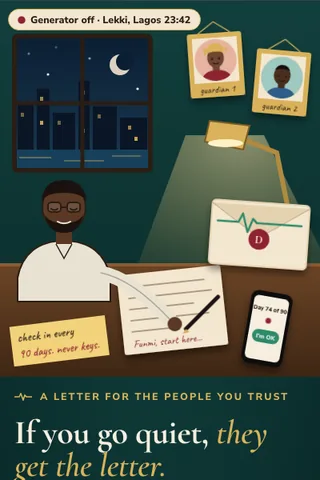
Leave clear onchain instructions so the people you trust can reach your crypto if you cannot.
 LIVE DEMO
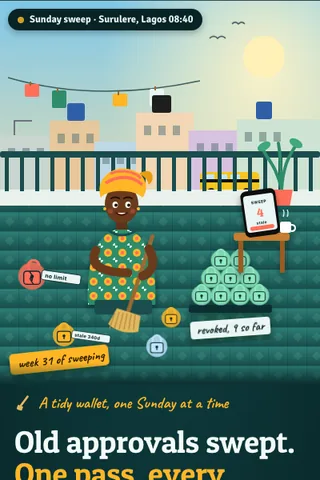
A weekly ritual that finds risky token approvals and lets you revoke them in one tidy pass.
 LIVE DEMO
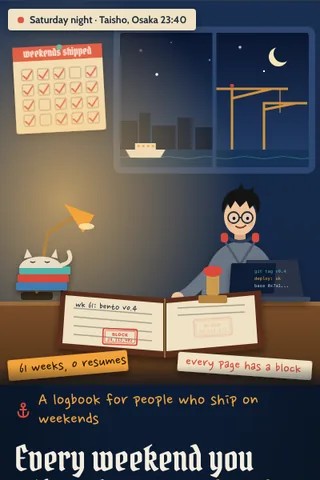
Every commit, deploy, and demo you ship becomes a signed, timestamped builder diary.
 LIVE DEMO
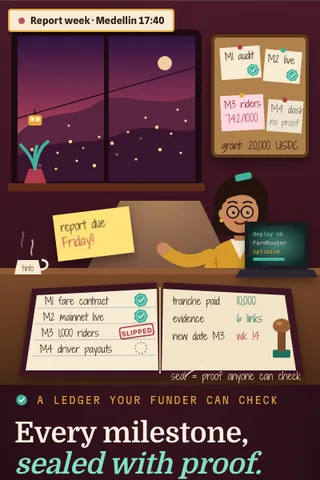
Show funders exactly what their grant built, milestone by milestone, with proof attached.
 LIVE DEMO
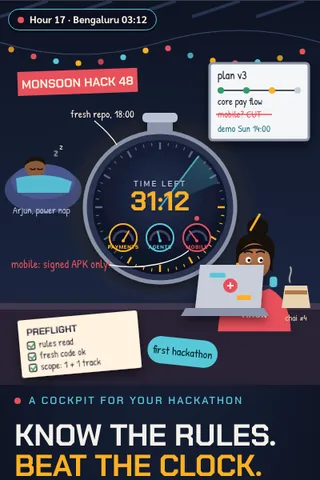
A hackathon cockpit that plans your scope, tracks bounties, and drafts a judge-ready submission.
 LIVE DEMO
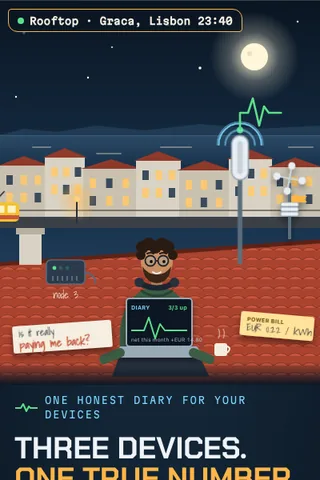
Your DePIN devices report uptime and earnings in one honest dashboard with tax-ready exports.
 LIVE DEMO
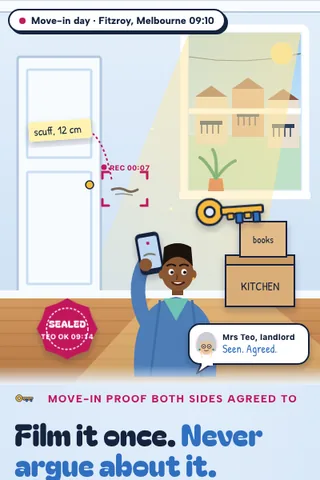
Tenants and landlords seal move-in photos and rent receipts so deposit disputes end fast.