
 LIVE DEMO
USDC Paywall
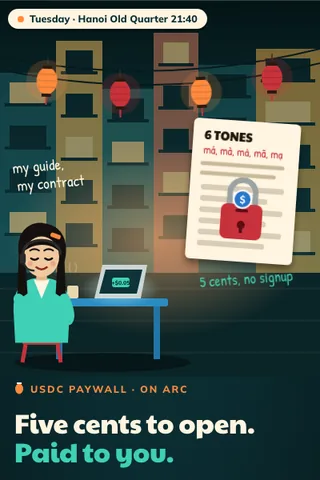
Lock content behind a fraction-of-a-cent USDC payment, on your own Arc contract. Deploy it, become the onchain creator.
Ready now
$100Arc
 Try it live
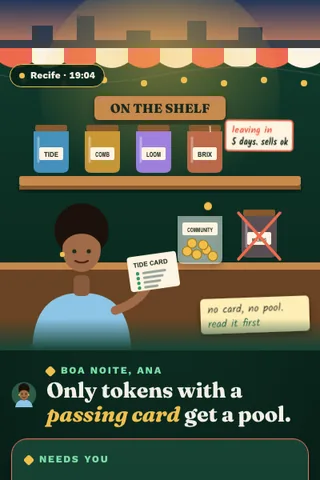
Your own DEX with a shelf: a token gets a pool only after it passes a public safety card, and a slice of fees funds your community.
Try it live, freeYour USDC is locked in a smart contract, not sent to us. The contract lets us collect it only if we deliver within 14 days of your payment (by 15 Nov 2026 if you pay today). After that date, if we have not collected it, you take it back yourself from My apps, no permission needed. Before it, only we can refund: if we miss the promised date, ask in My apps and we refund you from the contract. View the contract on BaseScan. This covers every payment, a reservation too: the funds are released to us only when we deliver.
Promised delivery: 6 Nov 2026 (counted from payment). Self-refund opens: 15 Nov 2026 (the contract deadline).
Add-ons are not part of this payment. Once your app is delivered you can request them from My apps, and you only pay if you say yes to the quote.
Ana Souza, a nursing student in Recife, lost 200 USDC on a token whose creator minted more the day after she bought. On Shelf Swap, the tokens her friends send her get a public safety card first: owner keys, mint authority, liquidity lock and holder concentration. If the card fails there is simply no pool, and when a shelved token turns risky it leaves with days of notice and sells left open, while a slice of every swap fee funds her local crypto meetup.
The user app: shelf of listed tokens with public safety cards, swap with the fee split shown before signing, the not on the shelf flow for failing tokens, delist notices with sells only, a live safety card builder and listing request, swap receipts, plans and checkout, plus the Uniswap v4 listing hook and card registry deployed on one chain.
Reshape it entirely: new features, your flows, your brand end to end, integrations you need. We scope it with you.
Token scanners (GoPlus, DEXTools lock checks), curated token lists and Uniswap's hook allowlist all exist, but they warn or route; they do not stop a pool from existing. Shelf Swap is built on Uniswap v4 hooks so a pool can only initialize for tokens whose card passes the owner's published rules, buys pause during a delist notice while sells stay open, and the pool fee is split on chain between liquidity providers, a community fund and the owner.
GoPlus and DEXTools safety scans (warnings, not gates), curated default token lists in DEX front ends, Uniswap v4 permissioned pools (for regulated assets) and the Uniswap hook routing allowlist; in this catalog slow-mint (fair launches) and scam-mirror (scam awareness).
Checked with web searches in October 2026. A search is not proof that nothing similar exists, and the market moves fast, so we recheck before every build.
One live race fits this app. Each one says why, with its prize and countdown. The rule on existing code is on the race page.
See every race on the boardA community DEX you own, built on Uniswap v4: tokens get a pool only after a public safety card passes, risky ones leave with notice, a slice of every fee funds your community, and you earn your own disclosed slice plus plans and reviews.
Every buyer gets the same finished app. Basic branding and copy changes come through a quick form.
Your admin side: revenue, paywall editor, users, rules and the agent log.
Referral and growth mechanics, switched on when you are ready to grow.
A disclosed slice of every pool fee goes to you and another slice to the community fund, set in the hook. On top, traders can pay for card change alerts and token teams pay once for a priority review that never changes the result.
Pool fee of 0.05 to 1 percent (default 0.30 percent). Default split: 80 percent to liquidity providers, 10 percent to the community fund, 10 percent to the owner, shown before every swap.
Prices are yours to set. Illustrative, not a promise of income.
Unlocked when your app is paid in full
Unlocked when your app is paid in full
Your shop name, chain, card thresholds, extra checks (for example tax tokens or proxy upgrades), fund governance and token team onboarding are scoped and priced together.
The recipe (how it is built, the data, costs, risks, build order, the pitch and the demo script) is unlocked when your app is paid in full.
New traders buy tokens that friends post in group chats, and many lose money to setups any expert could spot: an open mint, a single owner key, unlocked liquidity or a handful of wallets holding most of the supply. Scanners exist, but they only warn, and anyone can create a pool for anything.
Scanners such as GoPlus and DEXTools flag risky tokens, DEX front ends ship curated token lists, and Uniswap v4 supports hooks, permissioned pools and a routing allowlist. What is uncommon is a DEX where the safety card is the gate: no passing card, no pool, enforced by a hook, with delists announced in advance and a slice of fees sent to a community fund. Research verdict: the parts exist, the combination is rare. Medium novelty.
Unlocked when your app is paid in full
Swapping should start with knowing what you are buying, and a community exchange should give back to the community that uses it.
No card, no pool A token only gets a pool after its public card passes. Nobody can add one around the rule.
Notice, not overnight When a card starts failing, buys pause and sells stay open for a set number of days before the pool closes.
The fund report Every month, what the community fund received from fees and what it paid for, with receipts.
Unlocked when your app is paid in full
Cost per use: unlocked when your app is paid in full.
Failing cards are shared by the people they protect: someone pastes a token, sees it fail, and sends the card back to the chat it came from. Token teams fix their setup to earn a place on the shelf and point their holders to it. The monthly fund report gives the community a reason to keep swapping here.
Unlocked when your app is paid in full
Unlocked when your app is paid in full
Costs and tools are estimates at the time of writing. General information only, not legal or financial advice.
Nine routes from one vessel. Tap a port to open its chart.
Every crypto community has a group chat where someone posts a token and someone else loses money on it. Owning Shelf Swap means your community gets its own exchange with a rule everyone can read: no passing safety card, no pool. Risky tokens leave with notice, a slice of every swap fee pays for things the community wants, and you earn your own disclosed slice for running it.
You are not building an AMM. Shelf Swap uses Uniswap v4 for the pools and adds one small hook and a registry. Your work is choosing the rules, reviewing listing requests and posting the fund report, all from the console.
It can, and the app says so next to every swap: a card checks how a token is set up, not where its price goes. You can lose money. Your promise is narrower and keepable: no open mints, no single keys, locked liquidity, no surprise delists.
The hook decides, not you. A failing card cannot be shelved even if you wanted to. Paid reviews only buy speed, never a pass, and every decision is public.
Rules for running an exchange front end and taking fees differ by country. Many owners start as a community tool with a small fee and take local legal advice before growing. We never promise returns for traders or for you.
A slice of pool fees on swap volume, Regular plans for traders who want alerts, and one time reviews paid by token teams who want a place on the shelf.
Illustrative stages, not a forecast. Results depend on you and the market; nothing here is guaranteed.
LIVE DEMOLock content behind a fraction-of-a-cent USDC payment, on your own Arc contract. Deploy it, become the onchain creator.
 LIVE DEMO
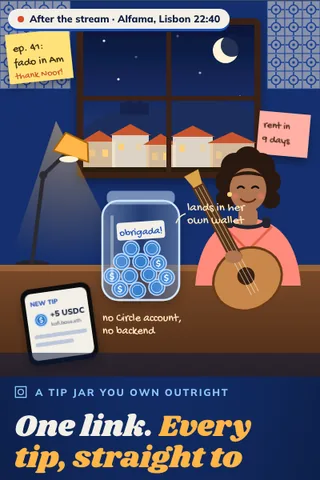
Take pay-what-you-want USDC tips on Base, with a live supporters feed read straight from chain. No Circle account, no backend.
 LIVE DEMO
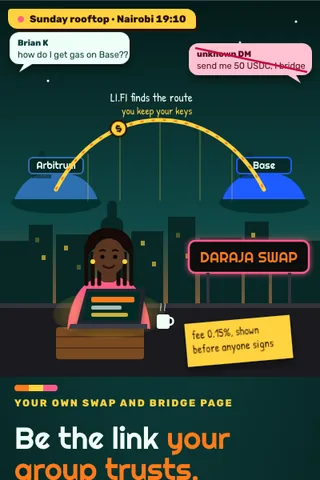
Your own swap/bridge front-end. Integrator fee optional and disclosed.
 LIVE DEMO
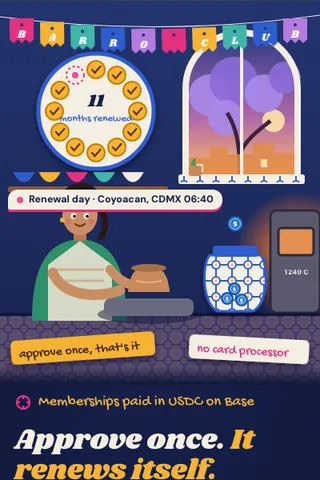
Recurring USDC on Base. Members approve once, it renews itself. No card processor, no contract.
 LIVE DEMO
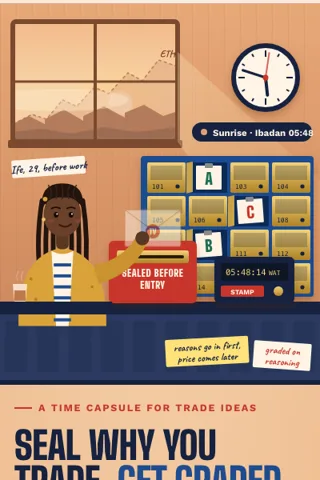
Write why you entered a trade, seal it with the timestamp, and get graded on reasoning, not luck.
 LIVE DEMO
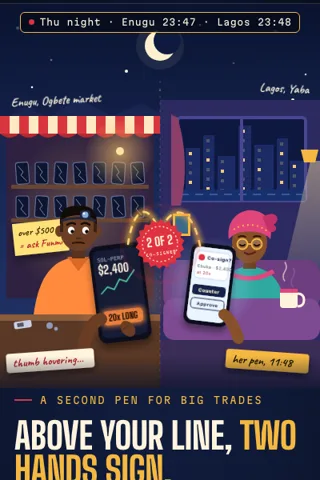
Let a trusted mentor co sign your risky trades above a size you choose.
 LIVE DEMO
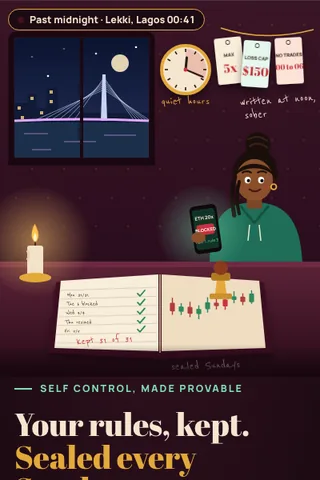
Your perp bot follows your rules, and every rule you kept becomes a public, provable track record.
 LIVE DEMO
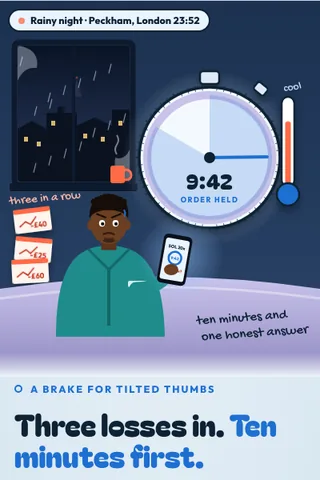
A tilt brake that delays your trades after losses until you answer one honest question.