 LIVE DEMO
Sealed Take
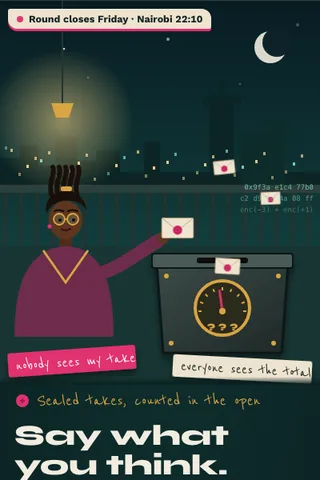
Everyone stakes a conviction, encrypted. The chain tallies it without ever seeing a single take. FHE on Base.
Ready now
$100Fhenix
 Try it live
Your own RWA tokenization for small shared things: a tractor, a boat, a roaster, with shares, a booking calendar and a repair fund.
Try it live, freeYour USDC is locked in a smart contract, not sent to us. The contract lets us collect it only if we deliver within 14 days of your payment (by 15 Nov 2026 if you pay today). After that date, if we have not collected it, you take it back yourself from My apps, no permission needed. Before it, only we can refund: if we miss the promised date, ask in My apps and we refund you from the contract. View the contract on BaseScan. This covers every payment, a reservation too: the funds are released to us only when we deliver.
Promised delivery: 6 Nov 2026 (counted from payment). Self-refund opens: 15 Nov 2026 (the contract deadline).
Add-ons are not part of this payment. Once your app is delivered you can request them from My apps, and you only pay if you say yes to the quote.
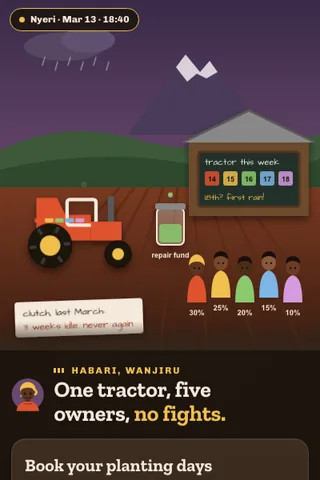
Wanjiru Kamau and four neighbours near Nyeri, Kenya, pooled money for a used tractor, then fought every planting season over who used it first, left it idle three weeks when the clutch broke, and watched one neighbour rent it out and keep the money. Co-Own records everyone's shares, books planting days by share weight with a clash rule they agreed, tops a repair fund with every hour of use and splits outside rental income by shares. The paper agreement still says who legally owns the tractor; Co-Own keeps the shares and money straight.
The user app: share register for one shared thing, booking calendar with days by share weight and a clash rule, usage fees into a repair fund, repair votes by share weight, outside rentals with income split by shares, ledger with receipts, share sale with first refusal, plans and simulated checkout.
Reshape it entirely: new features, your flows, your brand end to end, integrations you need. We scope it with you.
Fractional ownership platforms tokenize yachts and property for investors, and co-ownership tools schedule boats offchain. What is new is the small, known group version as an owned app: an onchain share register for people who already know each other, booking days weighted by shares with an agreed clash rule, a repair fund topped by usage fees, repair votes by share weight and rental income split automatically, with plain honesty that the legal agreement stays offline.
CBA and EY's shared smart asset pilot with farmers who co-owned a tractor, WeCoOwn (co-ownership with blockchain share tracking, offchain scheduling), diyFractional (offchain scheduling and expenses), plus yacht and property tokenization platforms aimed at investors.
Checked with web searches in October 2026. A search is not proof that nothing similar exists, and the market moves fast, so we recheck before every build.
2 live races fit this app. Each one says why, with its prize and countdown. The rule on existing code is on the race page.
Your own small group co-ownership app: neighbours record shares in a tractor, boat or roaster, book days by share, fill a repair fund with every hour of use and split rental income, while your console runs plans, group defaults, growth and the assistant log.
Every buyer gets the same finished app. Basic branding and copy changes come through a quick form.
Your admin side: revenue, paywall editor, users, rules and the agent log.
Referral and growth mechanics, switched on when you are ready to grow.
Each group pays you a small monthly plan, once for the whole group. The register, calendar and repair fund are free for small groups; Yard and Co-op add rentals, bigger groups, share sales and more assets. You never take a cut of rentals or the fund.
Prices are yours to set. Illustrative, not a promise of income.
Unlocked when your app is paid in full
Unlocked when your app is paid in full
Your brand, asset types and units, local language, mobile money partner, hour meter hardware or a white label for a farmer co-op federation are scoped and priced together.
The recipe (how it is built, the data, costs, risks, build order, the pitch and the demo script) is unlocked when your app is paid in full.
Small groups who know each other buy things together all the time: a tractor, a fishing boat, a coffee roaster, a laser cutter. Then they argue over who uses it when, who pays when it breaks, and where rental money goes, until the thing sits idle or the friendship breaks.
Partly exists. Investor facing tokenization platforms fractionalize yachts and property, CBA and EY piloted shared asset ownership with farmers who co-owned a tractor, and tools like WeCoOwn and diyFractional schedule shared boats offchain. Co-Own is the small group version as an owned app: an onchain share register, booking by share weight with an agreed clash rule, a repair fund topped by usage fees, votes by share weight and rental income split automatically. Research verdict: partly exists, medium novelty.
Unlocked when your app is paid in full
Let people who know each other own useful things together, fairly, without the fights.
The planting calendar Everyone sees their days by share and who has the tractor today. Clashes follow a rule the group chose, not whoever shouts loudest.
The repair jar Every hour of use drops a few dollars into a fund. When the clutch goes, it is fixed the same week.
The rental split Rent it to a neighbour and the money is split by shares in seconds, with a cut for the fund.
Unlocked when your app is paid in full
Cost per use: unlocked when your app is paid in full.
Renters see the split on their receipt and start groups of their own. Farmer co-ops and boat clubs show the calendar at meetings. Groups are people who already know each other; there are no public share sales or investment pitches.
Unlocked when your app is paid in full
Unlocked when your app is paid in full
Costs and tools are estimates at the time of writing. General information only, not legal or financial advice.
Nine routes from one vessel. Tap a port to open its chart.
Everywhere, small groups buy useful things together and then fall out over them. Owning Co-Own means you give those groups a fair system: shares written down, days booked by share, a repair fund that fills itself and rental money split without arguments. Start with one group you know, a farm, a boat, a maker space, and let the rental receipt bring the next.
Co-Own is for people who already know each other. Shares are only between approved members, there is no public market and no promised return. The app says plainly that legal ownership needs a signed local agreement. Rules differ by country, so get local advice before you run groups at scale. This is not legal advice.
They do not need to be. Passkey wallets, SMS reminders and mobile money top ups do the work; co-owners see days, shares and shillings. Start with one group where one member is comfortable with a phone.
Most fights are about missing rules, not bad people. Co-Own makes the group choose a clash rule, a repair threshold and a fee before the first booking. When it gets hard, the rule decides, and the log shows what happened.
Each group pays a small plan, and groups spread: every renter sees the split and every co-op has many groups. The ladder below grows by co-ops and federations, not by single sales.
A small monthly plan per group, higher tiers for co-ops with several assets, and setup fees for co-op federations and hardware add-ons.
Illustrative stages, not a forecast. Results depend on you and the market; nothing here is guaranteed.
LIVE DEMOEveryone stakes a conviction, encrypted. The chain tallies it without ever seeing a single take. FHE on Base.
 LIVE DEMO
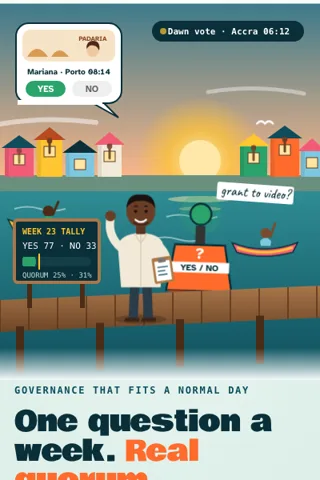
Governance by text-sized questions: one decision a week, answered in ten seconds, with real quorum.
 LIVE DEMO
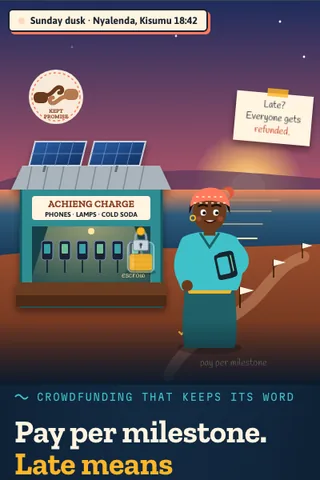
Crowdfunding where backers get refunded by contract if the goal or the milestones are missed.
 LIVE DEMO
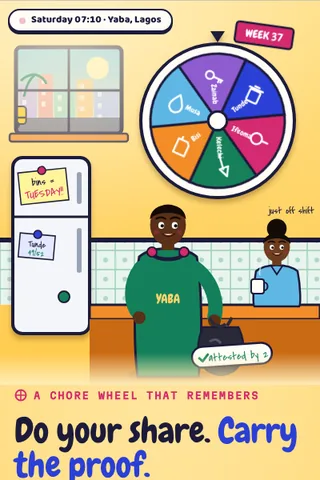
A shared house or club tracks who did the work, and the record becomes everyone's portable reliability score.
 LIVE DEMO
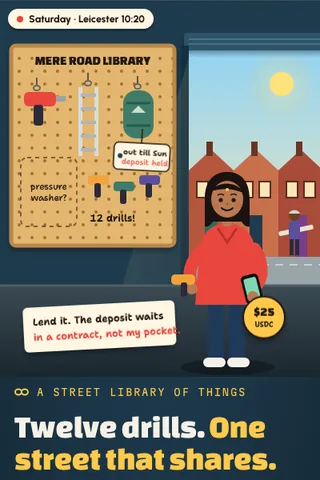
Lend the ladder, the drill, the tent: a street library of things with deposits held by contract.
 LIVE DEMO
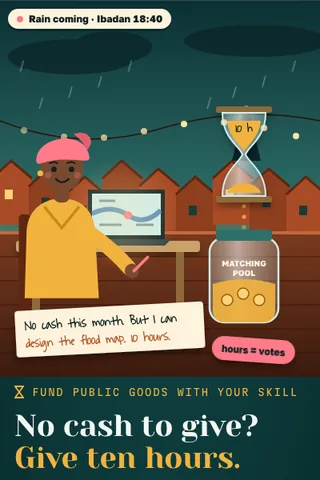
Fund a public good with hours of your skill, not just money, and get matched like a donation.
 LIVE DEMO
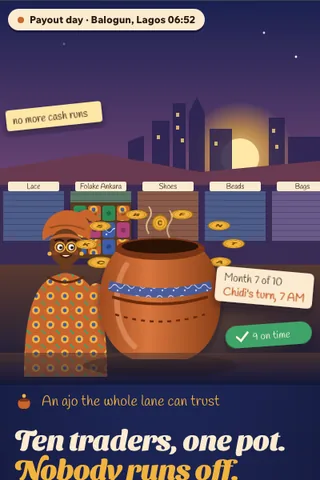
A rotating savings circle (ajo, susu, chama) with payouts enforced by contract and trust scores for members.
 LIVE DEMO
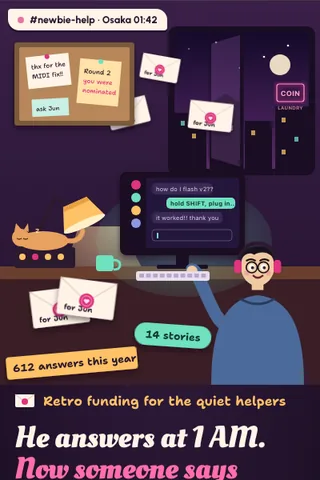
Retro funding for the quiet helpers: the community nominates who mattered, a pot pays them.