




 LIVE DEMO
USDC Paywall
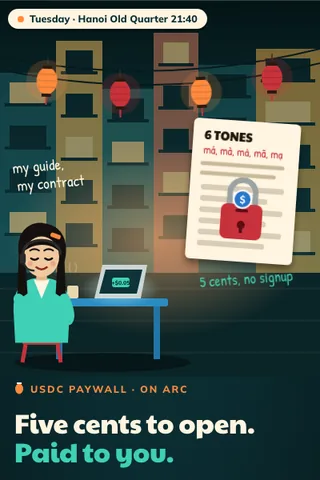
Lock content behind a fraction-of-a-cent USDC payment, on your own Arc contract. Deploy it, become the onchain creator.
Ready now
$100Arc
 Try it live
Your own Uniswap v4 hook pool whose swap fee rises when price moves fast and relaxes when it is calm, with a public fee diary and a plain words report for every liquidity provider.
Try it live, freeYour USDC is locked in a smart contract, not sent to us. The contract lets us collect it only if we deliver within 14 days of your payment (by 16 Nov 2026 if you pay today). After that date, if we have not collected it, you take it back yourself from My apps, no permission needed. Before it, only we can refund: if we miss the promised date, ask in My apps and we refund you from the contract. View the contract on BaseScan. This covers every payment, a reservation too: the funds are released to us only when we deliver.
Promised delivery: 11 Nov 2026 (counted from payment). Self-refund opens: 16 Nov 2026 (the contract deadline).
Add-ons are not part of this payment. Once your app is delivered you can request them from My apps, and you only pay if you say yes to the quote.
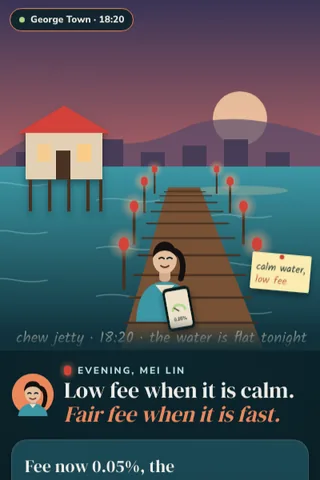
Mei Lin Tan, 38, a pharmacist in George Town, Penang, put 2,000 dollars of ETH and USDC into a pool last spring. During one fast hour, traders who saw the new price first bought from her pool at the old one, and she lost more than a month of fees. Calm Pool runs a hook that watches how fast price is moving: on a quiet afternoon swappers pay a low fee, and when price jumps the fee rises within a hard cap, so the people trading on a stale price pay the providers more for it. Every fee change lands in a public diary, and her weekly report says in plain words what she earned, what price moves cost her and what holding would have done instead.
A Uniswap v4 hook with a dynamic swap fee that follows recent price movement inside a floor and a hard cap, deployment scripts for Unichain, Base, Arbitrum and Ink, a pool page where people add and remove liquidity from their own wallet, a public fee diary, a weekly provider report with fees earned, price move cost and a hold comparison, an owner Base Builder Code slot appended to the app's Base transactions, plans with checkout, and an owner console.
Reshape it entirely: new features, your flows, your brand end to end, integrations you need. We scope it with you.
Dynamic fee hooks are a known Uniswap v4 pattern and several teams have shipped volatility based fees. What is new is the package for a single owner: a hook with a fee curve anyone can read on one card and a hard cap, a public diary of every fee change with the reason, and a weekly report per provider that compares fees earned with what price moves cost and with simply holding.
Uniswap v4 dynamic fee hooks and published examples of volatility based fees; managed liquidity vaults such as Arrakis and Gamma. Analytics dashboards show pool fees, but few explain to a single provider what price moves cost them in plain words.
Checked with web searches in October 2026. A search is not proof that nothing similar exists, and the market moves fast, so we recheck before every build.
10 live races fit this app. Each one says why, with its prize and countdown. The rule on existing code is on the race page.
A complete dynamic fee pool you own: a Uniswap v4 hook that raises the swap fee in fast markets and relaxes it when calm, a pool page where people provide liquidity from their own wallet, a public fee diary and honest weekly reports, monthly plans for keepers and operators, your own Base Builder Code on the app's Base transactions, and a console for pricing, growth, the fee curve and the indexing agent.
Every buyer gets the same finished app. Basic branding and copy changes come through a quick form.
Your admin side: revenue, paywall editor, users, rules and the agent log.
Referral and growth mechanics, switched on when you are ready to grow.
A free plan for every provider, and monthly plans for keepers who track many positions and operators who run a community pair. An optional owner share of the fast market surcharge is off by default, capped at 10 percent of the surcharge only, and disclosed on the fee card if switched on.
Optional owner share: 0 percent by default, at most 10 percent of the amount the fee rises above the floor, never of the floor fee itself, always shown on the fee card.
Prices are yours to set. Illustrative, not a promise of income.
Unlocked when your app is paid in full
Unlocked when your app is paid in full
Your brand, pair and fee curve, the chains you deploy on, report channels, an audit coordination package, or a white label for a token community are scoped and priced together.
The recipe (how it is built, the data, costs, risks, build order, the pitch and the demo script) is unlocked when your app is paid in full.
People who provide liquidity in a fixed fee pool lose value whenever price moves fast: traders who already see the new price buy from the pool at the old one. In calm markets a low fee brings swappers, but in a fast hour the same low fee hands value to whoever is quickest. Most providers never see this cost written down, so they only notice when their position is worth less than if they had held.
Dynamic fees largely exist as an idea: Uniswap v4 lets a hook set the swap fee on each swap, and volatility based fee hooks have been published and shipped by several teams. Calm Pool is an incremental, owner ready take: a fee curve with a floor and a hard cap printed on one card, a public diary of every fee change with the reason, and a weekly plain words report per provider that compares fees earned, the cost of price moves and simply holding. Research verdict: partly exists, medium novelty.
Unlocked when your app is paid in full
Providing liquidity should be a fair trade with a readable price: low fees when it is calm, fair fees when it is fast, and a report that tells the truth.
The fee card One card shows the curve: the floor, the cap and how fast price must move before the fee rises. Anyone can check the hook against it.
The fast hour diary Each time the fee rises or relaxes, the diary writes one line with the price move that caused it and what swappers paid.
Fees vs price moves vs holding A weekly report for each provider: fees earned, what price moves cost, and what holding the two tokens would have been worth. Sometimes holding wins, and the report says so.
Unlocked when your app is paid in full
Cost per use: unlocked when your app is paid in full.
The fee diary and the weekly report are shareable and honest, including weeks where holding did better. Token communities that want deeper, fairer liquidity for their pair can run an Operator pool. Hook builders share the fee card as a readable reference.
Unlocked when your app is paid in full
Unlocked when your app is paid in full
Costs and tools are estimates at the time of writing. General information only, not legal or financial advice.
Nine routes from one vessel. Tap a port to open its chart.
Every fixed fee pool leaks value to faster traders when price jumps, and most providers never see it written down. Owning Calm Pool means you run the fair version: a fee that follows the market inside a hard cap, a public diary of every change, and a weekly report that tells providers the truth even when holding would have done better. You earn from monthly plans and operator pools, and any owner share of the fast market surcharge is optional, capped and disclosed.
The hook, deploy scripts and pool page come with your copy, and the fee curve is set on one card. Your job is to run a small, well explained pool and answer providers. Start on a testnet, then with small deposits after an independent audit.
They can, and the app says so on the pool page and in every report. A higher fee in fast markets reduces what faster traders take, but it does not remove loss compared with holding. Never show projected returns, and point to the report, which shows weeks where holding won.
Running a pool interface is treated differently by country, and charging an owner share can change that. Calm Pool never holds deposits, and the owner share is off by default. Take local advice before you charge one, and never call the pool an investment.
Providers who were hurt in a fast hour understand the fee card in one look, and the public diary proves it works. Start with a pair you know and the people who already provide liquidity for it.
Monthly Keeper plans for active providers, Operator pools for token communities, and an optional disclosed owner share of the fast market surcharge. Illustrations, not promises.
Illustrative stages, not a forecast. Results depend on you and the market; nothing here is guaranteed.
LIVE DEMOLock content behind a fraction-of-a-cent USDC payment, on your own Arc contract. Deploy it, become the onchain creator.
 LIVE DEMO
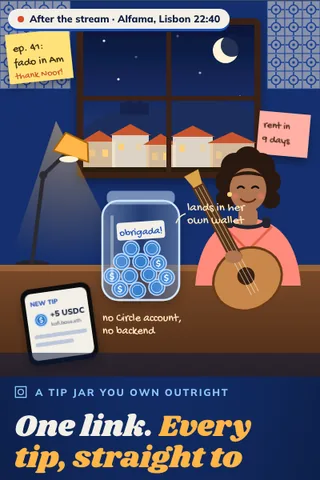
Take pay-what-you-want USDC tips on Base, with a live supporters feed read straight from chain. No Circle account, no backend.
 LIVE DEMO
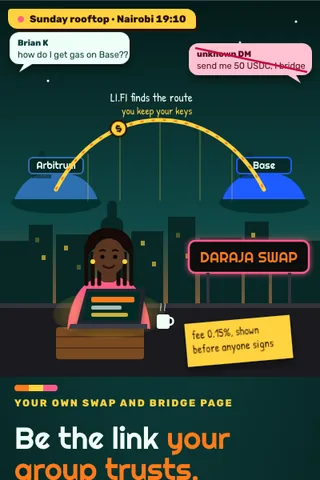
Your own swap/bridge front-end. Integrator fee optional and disclosed.
 LIVE DEMO
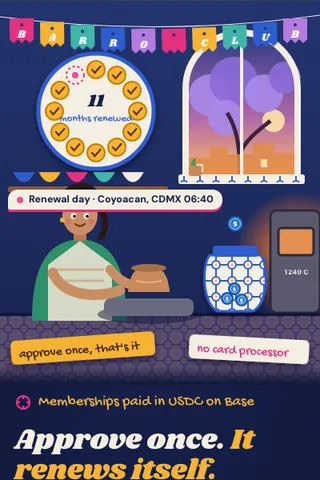
Recurring USDC on Base. Members approve once, it renews itself. No card processor, no contract.
 LIVE DEMO
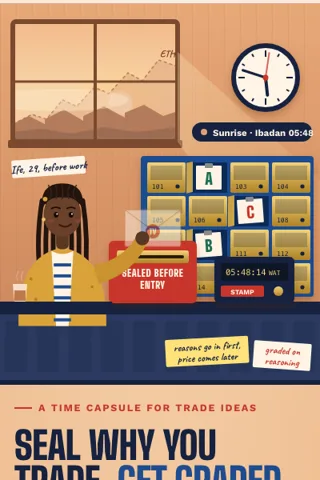
Write why you entered a trade, seal it with the timestamp, and get graded on reasoning, not luck.
 LIVE DEMO
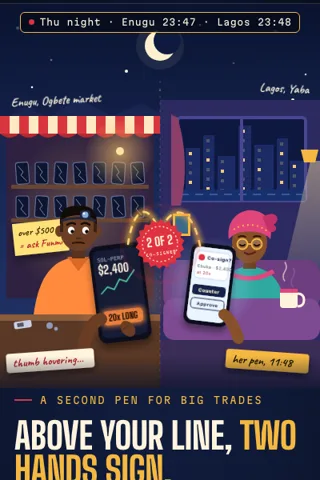
Let a trusted mentor co sign your risky trades above a size you choose.
 LIVE DEMO
Your perp bot follows your rules, and every rule you kept becomes a public, provable track record.
 LIVE DEMO
A tilt brake that delays your trades after losses until you answer one honest question.