 LIVE DEMO
Sealed Take
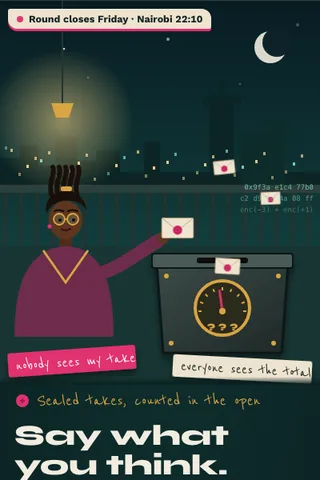
Everyone stakes a conviction, encrypted. The chain tallies it without ever seeing a single take. FHE on Base.
Ready now
$100Fhenix
 Try it live
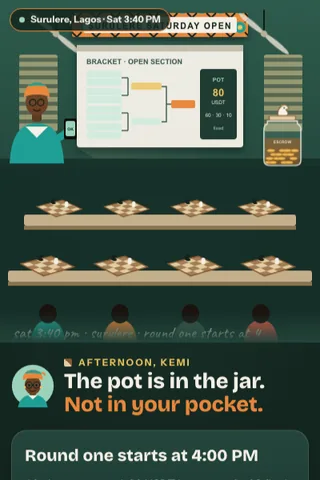
Run a chess club night or an esports bracket where entry fees sit in a contract, results need both players or a named referee, and prizes pay the moment the final is confirmed.
Try it live, freeYour USDC is locked in a smart contract, not sent to us. The contract lets us collect it only if we deliver within 14 days of your payment (by 16 Nov 2026 if you pay today). After that date, if we have not collected it, you take it back yourself from My apps, no permission needed. Before it, only we can refund: if we miss the promised date, ask in My apps and we refund you from the contract. View the contract on BaseScan. This covers every payment, a reservation too: the funds are released to us only when we deliver.
Promised delivery: 8 Nov 2026 (counted from payment). Self-refund opens: 16 Nov 2026 (the contract deadline).
Add-ons are not part of this payment. Once your app is delivered you can request them from My apps, and you only pay if you say yes to the quote.
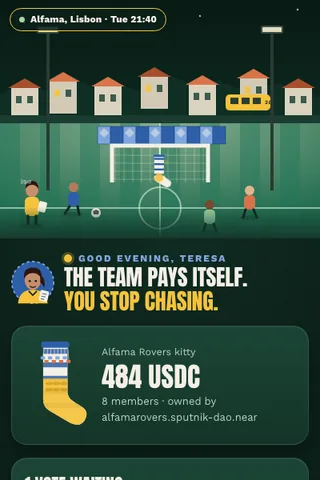
Kemi Adeyemi runs a Saturday chess open in a community hall in Surulere, Lagos, and for two years she has held the entry fees in an envelope and paid prizes from her own pocket when the count came up short. Last season a strong player entered the under 1400 section on a second account, and two finals ended in shouting about who resigned first. With Bracket Pot each player enters once with a member pass, the fees wait in an escrow contract on BNB Chain that everyone can read, both players confirm each result on their phones or Kemi's named referee rules on it, and the prizes pay out the second the final is signed.
One organizer app on BNB Chain: tournament builder with single elimination, double elimination and Swiss pairings, an entry fee escrow contract with the prize split fixed at creation, member passes for one person one entry, result confirmation by both players with a dispute window and a named referee, automatic payout on the confirmed final, a public bracket page, a free entry mode, allowed region settings and an organizer console.
Reshape it entirely: new features, your flows, your brand end to end, integrations you need. We scope it with you.
Tournament software (Challonge, start.gg, Swiss Manager, Lichess and Chess.com club events) is mature, and some esports platforms hold entry fees. What is new is the bundle for small real world organizers: an escrow contract whose prize split is fixed before the first round, a result that only counts when both players confirm it or a referee named in advance decides inside a dispute window, a one person one entry member pass that blocks second accounts in rating sections, and an automatic payout the moment the final is confirmed.
Challonge and start.gg for brackets; Swiss Manager and Lichess or Chess.com club events for chess pairings; Gamer.Tag style and esports cash tournament sites that hold entry fees on their own books.
Checked with web searches in October 2026. A search is not proof that nothing similar exists, and the market moves fast, so we recheck before every build.
8 live races fit this app. Each one says why, with its prize and countdown. The rule on existing code is on the race page.
A complete tournament app you own: organizers run brackets where entry fees sit in a contract, results need both players or a named referee, and prizes pay on the confirmed final. They pay you monthly for bigger events and seasons, and your console runs pricing, growth, rules and the payout agent.
Every buyer gets the same finished app. Basic branding and copy changes come through a quick form.
Your admin side: revenue, paywall editor, users, rules and the agent log.
Referral and growth mechanics, switched on when you are ready to grow.
Organizers pay a monthly plan for bigger fields, Swiss pairings and seasons. Players never pay the app; an optional organizer fee is set by the organizer, shown before entry and capped by the owner.
An optional organizer fee of up to the owner's cap, taken only on a completed event and shown on the tournament card before anyone enters.
Prices are yours to set. Illustrative, not a promise of income.
Unlocked when your app is paid in full
Unlocked when your app is paid in full
Custom features beyond the roadmap, such as rating integrations, new games or a federation dashboard, start from $1,200 and are scoped on a call.
The recipe (how it is built, the data, costs, risks, build order, the pitch and the demo script) is unlocked when your app is paid in full.
Small tournament organizers, like chess clubs, fighting game nights and local esports leagues, collect entry fees in cash or by bank transfer, carry the prize money themselves and settle disputed results by shouting. Strong players enter beginner sections on second accounts, and when the count is short the organizer pays from her own pocket. Players have no way to see that the pot is really there or how it will be split.
Brackets and pairings exist and are good: Challonge, start.gg, Swiss Manager and Lichess or Chess.com club events. Cash tournament sites exist, but they hold entry fees on their own books. Bracket Pot is an incremental take for small real world organizers: entry fees go into an escrow contract with the prize split fixed before round one, results count only when both players confirm or a referee named in advance rules inside a dispute window, a member pass blocks second accounts, and the payout runs the moment the final is confirmed. Research verdict: brackets exist; the escrow, dual confirmation and one person one entry bundle for local clubs is a medium novelty.
Unlocked when your app is paid in full
A local tournament should be fair to every player: one entry each, a pot everyone can see, results both sides agree to, and prizes paid on the spot.
The pot on the wall A public page shows the escrow balance, the prize split and the bracket live, so a club can put it on the hall projector and nobody wonders where the money is.
Both thumbs up A result counts when both players tap confirm. If one disagrees, the named referee gets a ten minute window and a short evidence note, and the bracket waits.
Paid before the chairs are stacked The moment the final is confirmed, the contract pays first, second and third to their own wallets, and each player gets a receipt they can show.
Unlocked when your app is paid in full
Cost per use: unlocked when your app is paid in full.
Every bracket page is shared in the club's group chat and shown on the hall projector, and every payout receipt carries the club's name. Organizers bring their whole club; players who travel to other clubs ask those organizers to use it too.
Unlocked when your app is paid in full
Unlocked when your app is paid in full
Costs and tools are estimates at the time of writing. General information only, not legal or financial advice.
Nine routes from one vessel. Tap a port to open its chart.
Every weekend thousands of clubs run chess opens, fighting game nights and campus esports brackets, and most of them still keep the entry fees in an envelope. Owning Bracket Pot means you run the fair version: one entry per person, a pot everyone can see in a contract, results both players confirm or a named referee decides, and prizes paid before the chairs are stacked. You earn from organizer plans, never from a cut of anyone's game.
It is a skill tournament, not a bet: players pay to enter a game they play themselves, and nobody can wager on the outcome. Paid entry contests are still restricted in some places, so set your allowed regions and a fee cap before you launch, and offer free entry mode everywhere. Take local advice before you charge entry fees.
Keep it small: one escrow per tournament, a fixed split, automatic refunds on cancellation and a cap on entry fees. Get the contract reviewed before you allow larger pots, and say plainly on every card how the money moves.
The organizers who already do. Chess clubs, fighting game communities and card shops run events every week and already handle cash. Your job is to find them, set them up and support them.
Brackets are free, and they stay free here too. Organizers pay for the part that hurts: holding money, settling disputes and stopping second accounts, which the bracket tools do not do.
Monthly organizer plans, a league plan for clubs with seasons, and white label copies for federations and esports leagues. Illustrations, not promises.
Illustrative stages, not a forecast. Results depend on you and the market; nothing here is guaranteed.
LIVE DEMOEveryone stakes a conviction, encrypted. The chain tallies it without ever seeing a single take. FHE on Base.
 LIVE DEMO
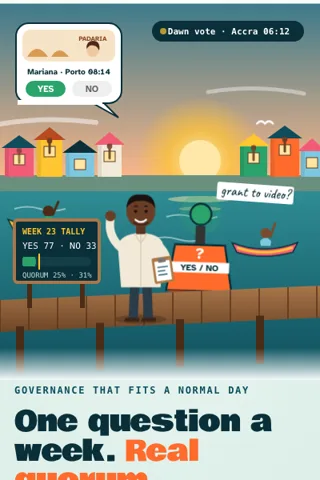
Governance by text-sized questions: one decision a week, answered in ten seconds, with real quorum.
 LIVE DEMO
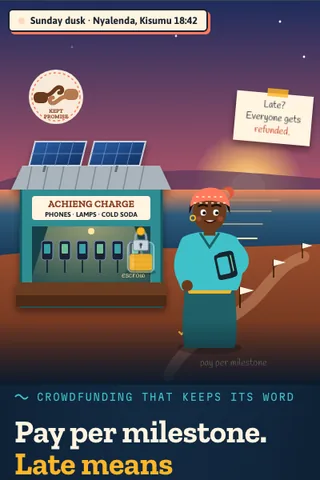
Crowdfunding where backers get refunded by contract if the goal or the milestones are missed.
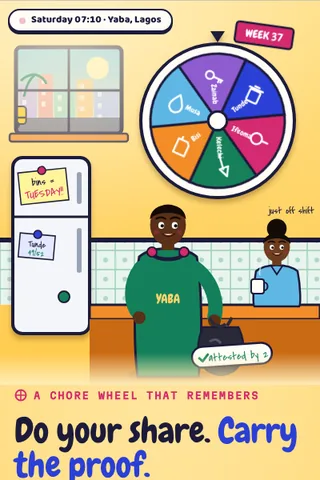 LIVE DEMO
A shared house or club tracks who did the work, and the record becomes everyone's portable reliability score.
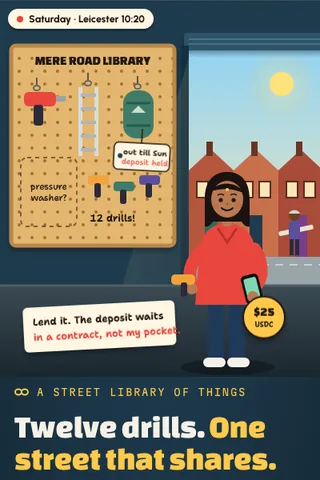 LIVE DEMO
Lend the ladder, the drill, the tent: a street library of things with deposits held by contract.
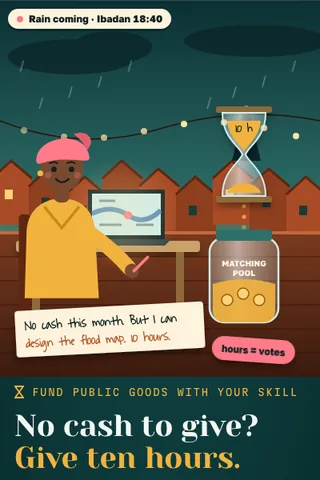 LIVE DEMO
Fund a public good with hours of your skill, not just money, and get matched like a donation.
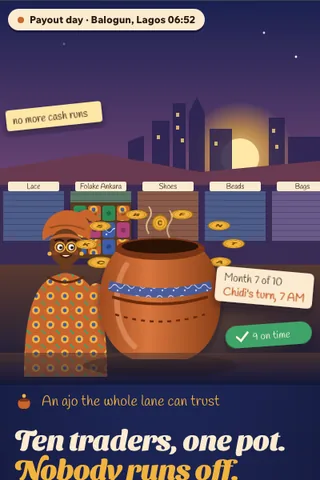 LIVE DEMO
A rotating savings circle (ajo, susu, chama) with payouts enforced by contract and trust scores for members.
 LIVE DEMO
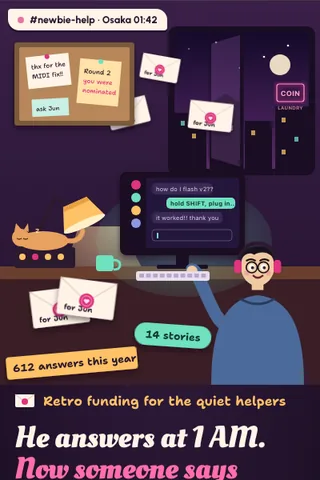
Retro funding for the quiet helpers: the community nominates who mattered, a pot pays them.